
Sailung trek | Indigenous people trail | 9 days
- Stunning views of the Himalayas from Sailung: from Makalu to Dhaulagiri
- A unique insight into at least six indigenous peoples and their cultures
- A fascinating blend of Hinduism and Buddhism: every village has a lama and a shaman
Sailung trek | Indigenous people trail | 9 days
9 days from n.t.b. p.p.
Request travel proposalHighlights
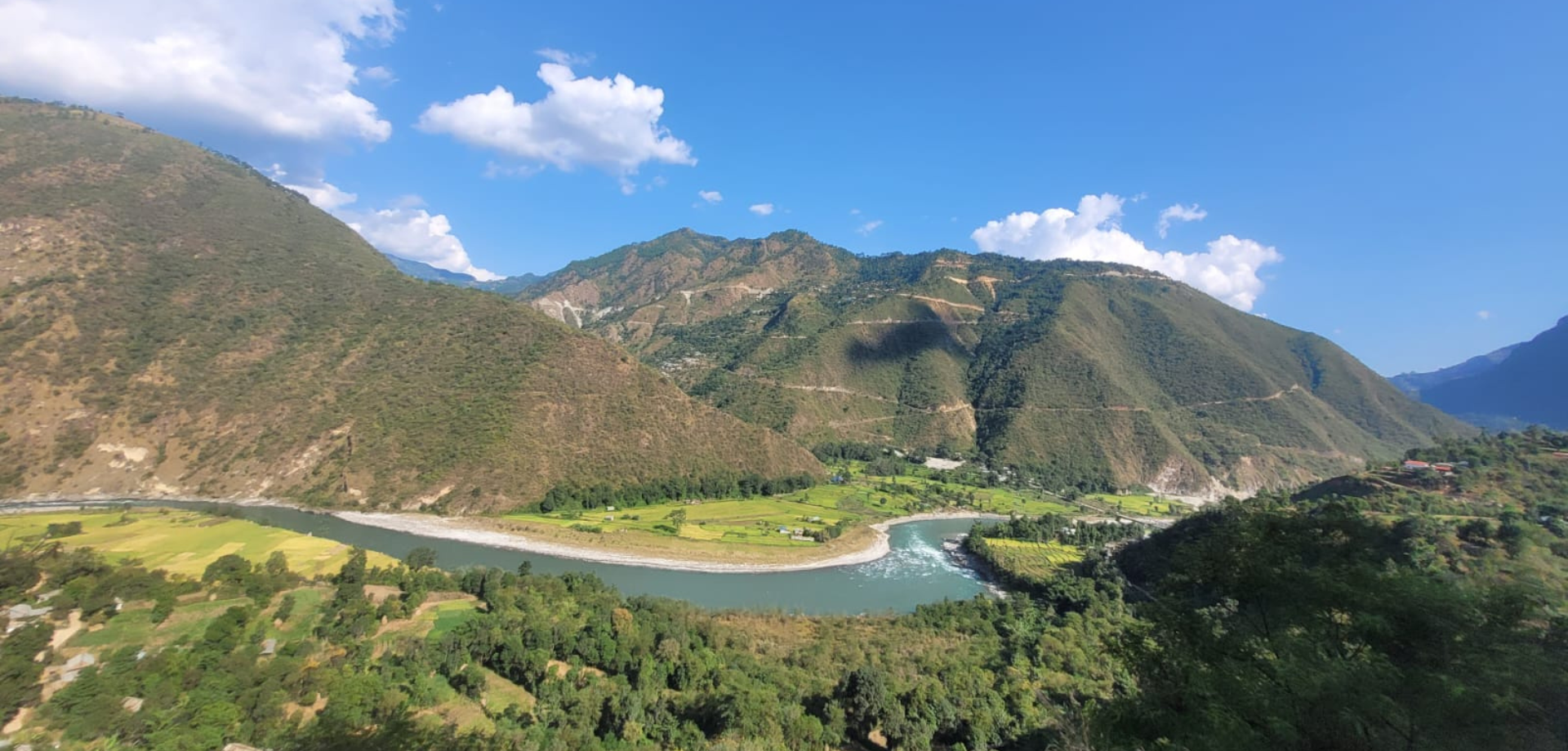
The Sailung trek offers an unforgettable experience thanks to a unique combination of unspoilt nature and cultural richness. From Sailung, you can enjoy breathtaking panoramic views of the Himalayas, from the impressive Makalu to the majestic Dhaulagiri. On a clear day, you’ll also be treated to a magnificent view of Mount Everest and the vast Terai lowlands to the south, making the trek even more impressive. During the journey, you will encounter at least six different indigenous peoples, including the Tamang, Sherpa and Rai, who cherish their own culture and traditions. In every village, you will meet both a Lama and a Shaman, highlighting the region’s spiritual and cultural richness, with a fascinating blend of Hinduism and Buddhism. Furthermore, the route is rarely used, meaning you will hardly encounter any other trekkers, which contributes to a sense of tranquillity and connection with nature and the local communities. This peaceful yet intense experience makes the Sailung trek one of the most special and unforgettable treks in Nepal.
Stunning views of the Himalayas from Sailung: of Makalu
The view from Sailung is undoubtedly one of the most impressive panoramas in Nepal. On a clear day, you can see no fewer than fourteen different mountain peaks, including the mighty Makalu to the east and the vast Dhaulagiri to the west. Sailung’s unique 360-degree viewpoint leaves you feeling as though you are standing in the midst of a sea of mountain giants. This spectacular view, far removed from the busy trekking routes, gives an almost magical sense of connection with the Himalayas.

On a clear day, you can see both Mount Everest and the Terai lowlands
One of the most remarkable aspects of this trek is the double reward: whilst in the north you can admire the snow-capped peaks of Mount Everest and others, in the south the Terai lowlands stretch out like an undulating carpet of green. This unique combination of views makes this trek a rare visual spectacle, allowing you to gaze from high mountains to subtropical lowlands — all from a single vantage point.

A unique insight into the culture of at least six indigenous peoples
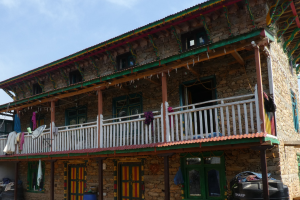
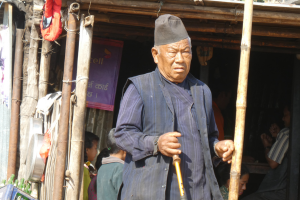
During the Sailung trek, you’ll pass through areas inhabited by communities including the Tamang, Sherpa, Rai, Magar, Newar and Sunuwar. Each of these peoples has its own language, traditional dress, architectural style and traditions. By staying overnight in simple homestays and village lodges, you gain an authentic insight into their daily lives. This direct interaction with the locals ensures that this trek is also culturally very enriching.

A fascinating blend of Hinduism and Buddhism: lamas and shamans
In every village along the way, you’ll notice how spirituality is interwoven with daily life. What makes this region so special is the harmonious blend of Hindu and Buddhist customs. Many villages are home to both a Lama (Buddhist monk) and a Shaman (traditional healer and spiritual leader). This offers visitors a unique insight into religious tolerance and a rich spiritual experience that is deeply rooted in the local culture.

An immersive experience far removed from mass tourism
The Sailung trek remains largely undiscovered by the general public. You’ll walk along quiet paths, through forests, over hills and through villages where you’ll rarely encounter other travellers. This makes for a more immersive experience, allowing you to truly lose yourself in nature and culture. The silence, the slow pace of village life and the absence of tourist crowds make this trek a true journey of discovery – perfect for those seeking authenticity and tranquillity.

Day-to-day
The Sailung trek takes you through a particularly unspoilt part of Nepal, far from the busy hiking trails. At a leisurely pace, you’ll trek from village to village, over ridges offering impressive views. On a clear day, you can see the entire Himalayan range, from Mount Everest to Dhaulagiri, as well as the Terai plains to the south.
What makes this trek unique is its cultural richness. You’ll pass through areas inhabited by at least six ethnic groups and experience a fascinating blend of Hinduism and Buddhism. In the villages, a lama and a shaman often live side by side. You’ll stay in simple village accommodation, where you’ll receive a warm welcome and gain an authentic insight into local life.
The Sailung trek is perfect for those who love peace and quiet, culture and stunning scenery – a unique experience off the beaten track.
-
Day 1: Private car transfer to Dhunge (approx. 4½ hours) / Trek to Khola Kharka (2,948 m) – approx. 3 hours
Today, you’ll set off with your guide and porter in a private jeep to the starting point of your trek, Dhunge. You’ll travel via Dhulikhel and then through the village of Mude. The journey takes about 4½ hours in total. Today is a short day’s walk. In Dhunge, you’ll begin a short climb towards Thulo Sailung. You then follow the path downhill until you reach the Sherpa village of Khola Kharka, where you will spend the night.
-
Day 2: Trek to Sailung (3,146 m) – approx. 4 to 5 hours
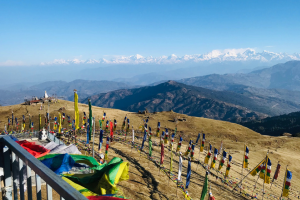
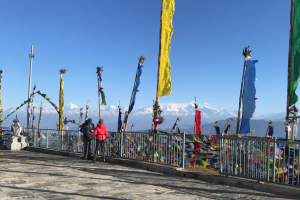
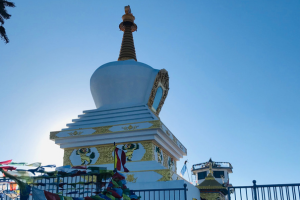
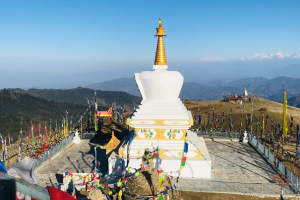
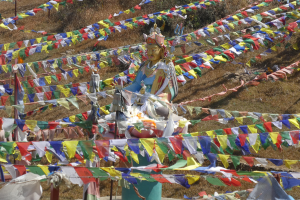
Today you will hike to the summit of Thulo Sailung. At an altitude of around 3,300 metres, Sailung offers impressive views across Kalinchowk towards Annapurna, Langtang, Ganesh Himal, Rolwaling, Everest and Kanchenjunga; to the south, you can see the Mahabharata Hills and the Sun Koshi River, and further down you can even see the lowlands of the Terai! Thulo Sailung is regarded by the indigenous Tamangs (the largest ethnic group in this region) as the abode of the region’s deity, Sailung Phoi Sibda Karpo. The chörten on Sailung Hill is the home of this divine protector, and the Tamang community are regarded as the ‘guardians of the land’. This is a very important – and therefore fascinating for you – place for the indigenous people. Just below the summit of Thulo Sailung lies Gaurighat Cave, regarded as a source of fertility and good health.
-
Day 3: Trek to Surke – approx. 4 hours
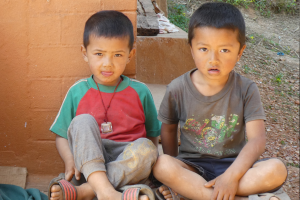
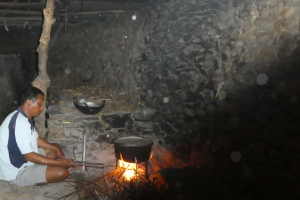
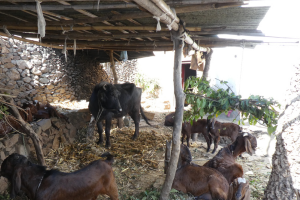
On a clear day, you can enjoy a breathtaking sunrise over the Eastern Himalayas here! After breakfast, you’ll follow the path downhill through rhododendrons to the Tashi Namgyal Choeling Monastery in Raj Veer, which was built in 1972 by the Bhutanese Drukpa Kagyu school. Unfortunately, this monastery was severely damaged by the 2015 earthquake. From Raj Veer Monastery, the trail continues downhill. You will no longer be walking through forests, but through green terraced fields. Along the way, you will pass a Sherpa village and a Tamang village. You will walk beneath and alongside prayer flags and past chortens and mani walls. The path continues downhill until you reach the spectacular ‘Thinghare’ waterfall: the water from the 12-metre-high waterfall plunges onto the rocks below. After another short climb, you arrive at the settlement of Surke, surrounded by beautiful terraced fields. You spend the rest of the day in the village. You can walk to the Gaurigaun viewpoint or pay a visit to the Thami community. This indigenous community is happy to show you their culture. There are only 30,000 of them, and the survival of their Tibetan-Burmese community is under threat.
-
Day 4: Trek to Doramba – approx. 3 hours
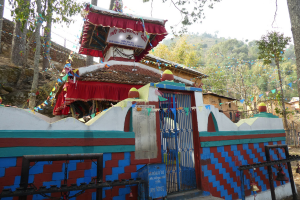
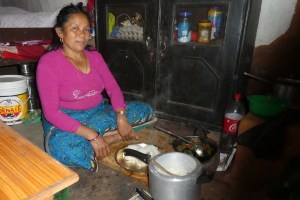
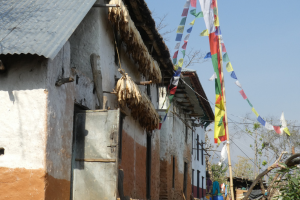
You walk through the Thami settlement before crossing the Doramba Valley. The path leads you over a wooded ridge to the terraced fields of Doramba. Doramba is one of the largest Tamang settlements in Nepal. Did you know that many of the Thangka artists you see at work in Boudha come from this village? The Tamang are very hospitable and also have their own language. Do give it a go with a few sentences!
-
Day 5: Trek to Khandadevi – approx. 3 hours
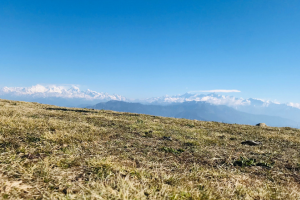
You leave the Doramba Valley and hike up to the summit of Agleshwari Danda. Here you’ll be rewarded with a breathtaking view of the Himalayas and the rolling Mahabhata hills below. There’s also a secret Hindu shrine on this hilltop! You descend through a slate mine, then through pine forests until you reach Galpa Bazaar. This village is situated on a pass between two valleys and is the perfect spot for lunch! Khandadevi lies atop a hill at an altitude of 1,977 metres. The village is built around a fascinating Hindu temple complex and is surrounded by ancient stone walls. The Hindu temple is dedicated to the goddess Khada Devi. The surroundings are picturesque! From the rolling, lush green Mahabharat Hills to the snow-capped peaks of Numburchuili and Gaurishankar in the north, with views stretching as far as the plains of the Terai in the south.
-
Day 6: Trek to Sunapati – approx. 3 to 4 hours
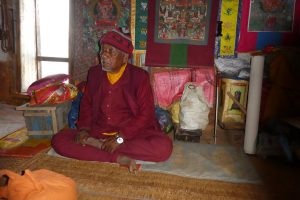
As you leave Khandadevi, you follow the path along a long mountain ridge, with views of the subtropical plains of the Terai on one side and the snow-capped Himalayan peaks on the other. Nepalese diversity at its best! The path winds up and down through dense alpine forests before you enter another valley. Before you reach Dhonghme, you’ll pass a huge rock in the middle of the forest on which a small temple dedicated to the god Shiva has been built. Dhonghme is an ancient Yolmo settlement, home to many lamas. The local lama will be happy to show you his extensive collection of Buddhist scriptures. In the evening, you can climb to the summit of Sunapati. The sunset here is spectacular. Being here, surrounded by Buddhist chortens and Hindu temples, makes for a magical experience.
-
Day 7: Trek to Lubughat – approx. 3 to 4 hours
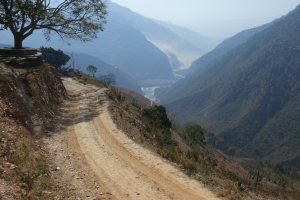
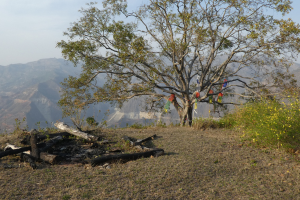
Early in the morning, you’ll enjoy a stunning sunrise. After breakfast, you’ll head down to the village of Lubughat on the famous Sun Koshi River. Here you’ll meet the Majhi community, who are renowned for their expertise in fishing. You’ll see the men, women and children in the river. Ze gooien herhaaldelijk netten in water in de hoop de passerende vissen te vangen.
-
Day 8: Trek to Thulo Parsel – approx. 4 hours
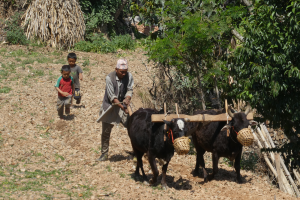
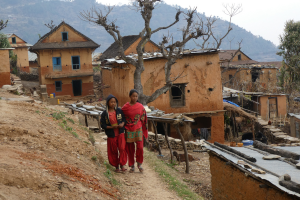
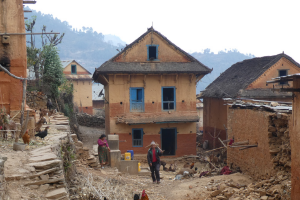
Today is the last day of your trek. You’ll walk through fields from Lubughat to Thulo Parsel. Thulo Parsel is a sprawling village, with views of the mountains and the river below. It is home to various communities, the majority of whom are Tamang, Brahmin and Chhetri. This is also the home village of Chuda and some of our guides and porters!
-
Day 9: Drive to Kathmandu – approx. 5 hours
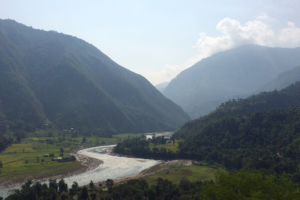
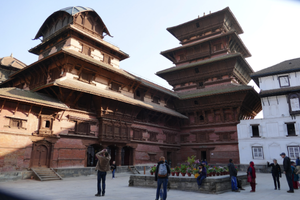
The end of the trip has arrived. After breakfast, you’ll set off back to Kathmandu in a private jeep. The first part of the journey is an adventurous drive, passing through villages and offering views of the river. You’ll then drive past Dhulikhel, Banepa and Bhaktapur until you reach Kathmandu.


Overnights
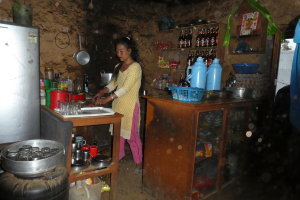
During the Sailung trek, you’ll stay in simple, authentic accommodation that perfectly suits the character of this trip. You’ll usually stay in homestays or community lodges, run by families from the villages where you’re a guest. Don’t expect luxury, but do expect warmth, hospitality and a unique insight into the daily life of the local communities.
The rooms are simply furnished, often with hard mattresses and limited amenities. Bathroom facilities are shared and usually consist of a Nepalese squat toilet. Hot showers are rare here: you wash with cold water from an outside tap, or – if you’re lucky – with a bucket of hot water heated especially for you.
These basic accommodations are part of the charm of this unique trip. They ensure that you really connect with the local area and contribute to sustainable tourism that directly benefits the local community.

Price information
The price for this Sailung trek is:
Adults: from € (to be confirmed) per person, based on two participants
Inclusive
- Pre-trek briefing with your guide
- Transfer by private vehicle to Dhunge
- 8 nights in basic homestays or community lodges
- 8 x breakfast, 8 x lunch, 8 x dinner
- English-speaking guide (salary, insurance, meals, accommodation and transport)
- Porters for your luggage – 1 porter for every 2 trekkers – max. 18 kg (including wages, insurance, meals, accommodation and transport)
- Transfer by private vehicle from Thulo Parsel to Kathmandu
Exclusive
- Entrance fees and donations at cultural sites
- Stay in Kathmandu
- Personal expenses (snacks, Wi-Fi, water filter, hot water for showers, Wi-Fi, etc.)
- Drinks & desserts
- Tips for the guide, porter and driver
- Visa for Nepal
- International flight tickets
- Travel and cancellation insurance
- Anything not expressly stated as included
Pratical
The Sailung trek is a unique journey through unspoilt countryside, far removed from mass tourism. On this trip, you’ll step out of your comfort zone, both literally and figuratively. Don’t expect luxury: you’ll be staying in simple homestays or community lodges, with hard mattresses, shared bathrooms and limited facilities. But that is precisely what makes this experience so authentic and rewarding. You’ll be a guest with local families and will make a genuine connection with the people and their way of life.
Below are some practical tips and points to bear in mind that can help you prepare properly and make this back-to-basics experience as comfortable as possible.
Tip: Respectful encounter with local communities
During the Sailung trek you will walk through villages where traditions and ways of life are still very authentic. A smile, a simple “Namaste” with the palms together, often opens a door. Wear respectful clothing (covered shoulders and knees) and be careful with photos: always ask permission before taking a portrait of someone. Take the time to listen, ask sincere questions through your guide, and show interest in their way of life — this will automatically create a warm, valuable connection.Want to give something back? By sleeping in homestays and eating local food, you directly support these communities. Small gestures, big impact.
-
How difficult is the Sailung trek?
The Sailung trek is a light to moderately challenging trek. You’ll walk for an average of 4 to 6 hours a day along easily accessible paths. There are a few gentle climbs, but no technical sections. Thanks to the relatively low elevation gain, this can be an excellent option for active travellers aged 55 and over and families with children aged 8 and above
-
What is the highest elevation we'll reach on this trek?
The highest point is at approximately 3,150 meters, at the summit of Sailung. Here, you’ll be rewarded with a panoramic view of both the Himalayas and the Terai lowlands. The moderate altitude makes this trek ideal for those prone to altitude sickness.
-
When is the best time to go on the Sailung trek?
The best times to visit are spring and fall: March through May and October through November. During these months, the weather is clear and pleasant, and you can enjoy stunning views and blooming rhododendrons. Because of the lower elevations, the hike is also suitable for winter, although it can be a bit chilly then.
-
How can you make your overnight stays a little more comfortable?
To make your stay in the simple homestays and community lodges more comfortable, we recommend that you bring the following:
🛏️ Sheet bag or lightweight sleeping bag – for extra hygiene and warmth
🧦 Warm socks and slippers – the rooms are not heated
💧 Reusable water bottle and water purification tablets or filter – tap water is never safe to drink
🚿 Quick-drying towel and washcloth, or possibly a sari or wrap—for washing at a stream or with a bucket
💡 Headlamp or flashlight – power supply is limited
🚽 Restroom bag with toilet paper and hand sanitizer – toilet paper is rarely available
🔥 Bring warm clothes for the evening—it can get quite chilly, even indoors
🩹 Personal first-aid kit and basic hygiene products – there are no stores nearby
-
What should I pack in my daypack for this hike?
Since the Sailung Trail passes through remote and rarely visited areas, it’s important to be well-prepared before setting out. Be sure to pack the following in your daypack every day:
🎒 Comfortable daypack (20–30 liters) with rain cover
🧥 Windproof and waterproof jacket – the weather can change quickly
🌞 Sun protection – sunscreen, sunglasses, and a cap or hat
🥤 At least 1.5 liters of water—and water purification tablets or a filter, if needed
🧃 Snacks or energy bars – there are few or no stores along the way
🧤 Warm hat and gloves – it can get chilly at high altitudes even during the day
🧦 Extra pair of socks – for wet or cold feet
👟 Broken-in hiking boots with good tread
📸 Camera or smartphone – for the breathtaking views
🗺️ Notebook or small journal – to jot down your thoughts
🧻 Toilet paper and a small trash bag – there are no facilities along the way
🚑 Personal first-aid kit with blister plasters
-
What should I bring for the host families?
A frequently asked (and valid) question. During the Sailung trek, you’ll stay with local families in homestays or community lodges. This gives you a unique glimpse into daily life, but it can also make you want to “give something back” or bring a gift.
We recommend approaching this with care and respect. Although well-intentioned, gifts such as candy, money, or random items can encourage begging or exacerbate inequality in the villages—and that is something we want to avoid.
What is appropriate:
🎨 Educational or creative supplies such as colored pencils, notebooks, or balloons, which you can give to the local school or community through your guide.🧼 Small toiletries (such as a bar of soap or toothbrushes) in consultation with the guide.
📚 Books in English or visual teaching materials – especially welcome at local schools.
🛑 What we prefer not to do: hand out items directly to children or families. Would you still like to contribute? Ask your guide for advice. Often, a genuine interest, a friendly conversation, and respect for their way of life are the best gifts you can give.
-
Is there Wi-Fi available during this hike?
During the Sailung trek, you’ll pass through remote villages where Wi-Fi is usually unavailable. If you still want to be reachable along the way or send the occasional message, we recommend purchasing a Nepalese SIM card with data in Kathmandu (e.g., from NTC or Ncell). This will give you coverage in some places along the way, though the signal remains inconsistent. So don’t expect a constant connection—and see it as an opportunity to truly go offline for a while.
-
Where will we stay overnight during the trek?
You’ll stay in simple homestays and community lodges. These are accommodations run by local families, offering basic amenities and a warm welcome. If there is a bathroom (which isn’t always the case), it’s often located in a separate building. Toilets are usually squat toilets.
-
What makes this trek so special?
You’ll walk through remote villages where tourists are still a rare sight and meet lesser-known ethnic groups such as the Thami and Majhi. The cultural exchange and hospitality you’ll encounter along the way make this a unique and rewarding experience.
-
Can this trek be combined with other destinations in Nepal?
Yes, the Sailung Trek is relatively close to Kathmandu, which means you can easily combine this trek with a cultural visit to Bhaktapur or a stay in the spiritual village of Pharping.

What others think of our trips

Trekking in Nepal with guides who truly care about you
Our guide Chhoisang Lama and sherpa Gaknaht were wonderful people. Perfect guides for anyone looking to trek in Nepal.

- Mardi Himal trek
- April 2025
Reliable family business with an eye for detail: our beautiful Langtang experience
I highly recommend Nepal Inside Out. It is a family business with a long history of experience in travel and trekking across the region.

- Roundtrip with Langtang trekking
- April 2025
Travel safely and well cared for through Nepal thanks to a fantastic team
We always felt safe and well looked after.

- Roundtrip with Lower Annapurna trek
- March 2025
Discover beautiful Nepal with Nepal Inside Out.
From breathtaking views to beautiful trails and warm evenings together. Nothing is too much trouble, and every effort is made to make the trip truly memorable. Many thanks and highly recommended for anyone wanting to discover Nepal with Nepal Inside Out.

- Roundtrip with Mardi Himal trekking
- November 2024
Nepal with the family? This trip exceeded all our expectations!
Many thanks to the wonderful team at Nepal Inside Out! They went above and beyond to organise our trip through Nepal with great care. The Langtang trek was beautiful, and we were accompanied by a kind guide and two brilliant porters who helped us enormously.

- Roundtrip with Tamang / Langtang valley trekking
An unforgettable family trip with trekking in Nepal during the Easter holidays
We were also so glad to have made this trip as a whole family and to witness the interactions between the local people and our children.

- Family trrip with 4-days trekking
- April 2024

Perfect 3-week tour through Nepal
Maaike and Chuda put together the perfect three-week trip through Nepal for us, including adventurous treks with stunning views, cultural visits with knowledgeable guides, and truly enriching encounters with local Nepali communities. The whole team is well organised and made up of genuinely dedicated people who act quickly whenever something is needed or something has not gone to plan. Highly recommended for anyone looking to book a trip to Nepal.

- Roundtrip with Mardi Himal trekking
- October 2023
Enthusiastic about Nepal?
Make your dream holiday a reality!
Nepal awaits you with its impressive mountains, vibrant culture and warm-hearted people. Whether you’re looking for a relaxing tour, an active trek or a tailor-made family holiday – we’d be delighted to help you get started.
📩 Get in touch with us and start planning today!
View our trips Request travel proposal