
Gokyo Trek | Turquoise Lakes | 12 days
- Enjoy the natural beauty on the shores of six turquoise, glacier-fed lakes
- Climb Gokyo Ri (5,357 m) and enjoy spectacular views of Everest, Lhotse and Cho Oyu.
- Avoid the crowds at Everest Base Camp, but enjoy some stunning views of the Himalayas
Gokyo Trek | Turquoise Lakes | 12 days
12 days from n.t.b. p.p.
Request travel proposalHighlights
The Gokyo Trek offers an unrivalled experience in the Everest region, with fewer crowds and phenomenal views that take you to the most beautiful and remote corners of the Himalayas. It is a trek that combines nature, adventure and culture, offering a unique way to experience the majestic Everest massif
Enjoy the natural beauty on the shores of six turquoise, glacier-fed lakes
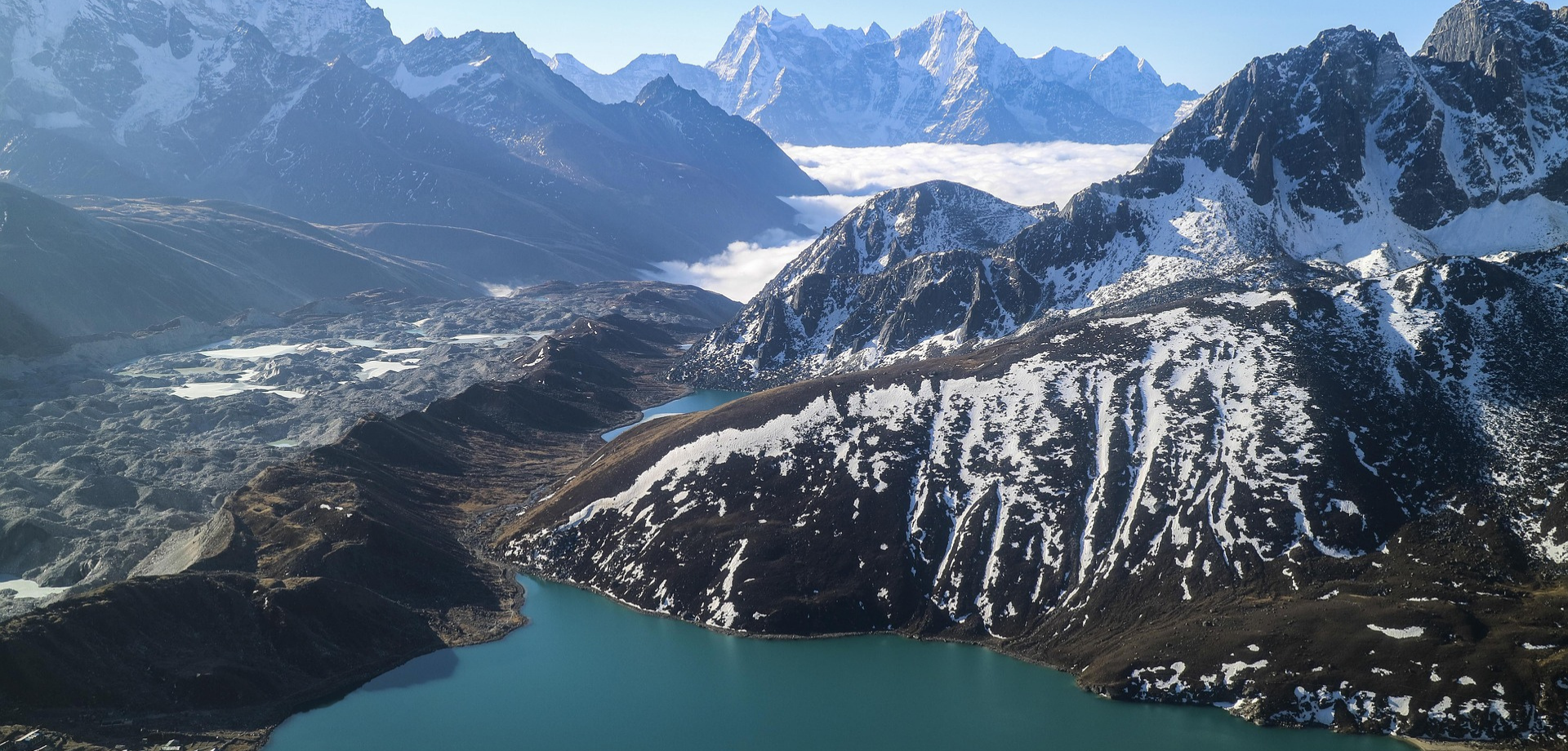
The Gokyo Trek takes you past six breathtaking glacier-fed lakes. The vibrant, turquoise waters reflect the surrounding mountains, and the tranquillity of the surroundings makes for a magical experience. These lakes are not only natural wonders, but also sacred sites for the local people. Hiking along these lakes is an experience you won’t soon forget, with the Himalayas in the background and a serene atmosphere that fully immerses you in the natural beauty of the area.

Climb Gokyo Ri (5,357 m) and enjoy spectacular views of Everest, Lhotse and Cho Oyu
Gokyo Ri is undoubtedly the highlight of the trek. At an altitude of 5,357 metres, this peak offers one of the most beautiful panoramic views in the Himalayas. From here, you can admire Mount Everest, Lhotse, Cho Oyu and countless other imposing peaks in the Everest massif. The climb itself is a challenge, but the reward is great. The view from the summit is truly spectacular and offers a perfect vista of the region’s gigantic glaciers, valleys and mountain ranges. It is the ultimate experience for any trekker wishing to see the Everest region in all its splendour.

Walk along the Ngozumpa Glacier (optional), the largest glacier in the Himalayas
The Ngozumpa Glacier is the largest glacier in the Himalayas and one of the most impressive sights you can visit during the Gokyo Trek. The trail alongside this glacier offers a fascinating view of the enormous ice masses and the deep-blue lakes that flow from the glacier. It is an optional part of the trek, but for those who wish to experience the beauty of a glacier in all its grandeur, it is certainly worth the effort. The walk through this unspoilt, rugged landscape is a wonderful way to experience the mountains up close and embark on a real adventure.

Avoid the crowds at Everest Base Camp, but enjoy some stunning views of the Himalayas
One of the biggest advantages of the Gokyo Trek is that you can avoid the crowds on the traditional Everest Base Camp route, whilst still being rewarded with incredible views of the Himalayas. The trek offers a quieter alternative, allowing you to enjoy panoramic views of iconic mountains such as Everest, Lhotse, Makalu and Cho Oyu, without the large crowds of trekkers. It is a wonderful way to experience the beauty of the Himalayas, away from the crowds, but with the same spectacular views.

Day-to-day
The Gokyo Trek is a unique route in the Everest region that takes you past serene mountain lakes, glaciers and authentic Sherpa villages. This less-travelled trek offers not only peace and natural beauty, but also unforgettable views of some of the highest mountains in the world. In the day-by-day itinerary below, you can discover how this special trek unfolds step by step.
-
Day 1: Flight to Lukla & trek to Phakding (2,652 m) – approx. 4 hours
Today starts early! Very early in the morning, you’ll head to the airport with your guide for the flight to Lukla (2,853 m). Lukla is the gateway to the Everest region and also the starting point for your trek to the stunning Gokyo Lakes. During the flight, you’ll get a taste of the splendour of the Himalayas and catch your first glimpse of Mount Everest in the distance.
In Lukla, you’ll meet your porter and set off towards Phakding (2,600 m). This village lies along the main route to Namche Bazaar and is home to a few clean lodges.Be aware of domestic flights to Lukla
During peak season (October, November, April and May) domestic flights to Lukla do not depart directly from Kathmandu. Instead, you will first travel by car or bus for about 4-5 hours to the small airport of Manthali (Ramechhap), from where you will take an early morning flight to Lukla. This is important to take into account when planning your trip.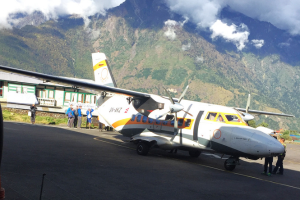
-
Day 2: Trek to Namche Bazaar (3,440 m) – approx. 4 hours
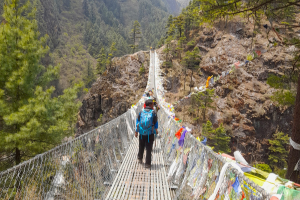
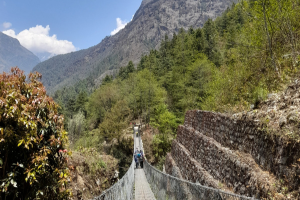
You continue your climb along the banks of the Dudh Kosi River, crossing it twice via suspension bridges. Sagarmatha National Park begins in the village of Monjo.
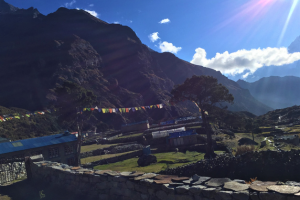
You then cross another high suspension bridge, where the Dudh Khosi and Bhote Khosi rivers converge. You climb uphill to Namche Bazaar. Namche is the Sherpa capital of the Everest region and a bustling market town where Tibetans sell their wares. From Namche, you have views of several high snow-capped peaks.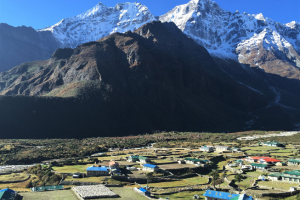
-
Day 3: Acclimatisation day in Namche Bazaar
To acclimatise to the altitude and the lower oxygen levels, you’ll be staying in Namche for an extra day today.
To continue acclimatising, today you’ll hike to Shangboche (3,900m), situated on a hill. From this vantage point, you’ll have a stunning view of the entire Everest region. After taking in the view to your heart’s content, you’ll return to Namche for lunch. This hike is ideal for helping your body get even more used to the altitude.
In Namche, you’ll visit the Sherpa Museum, where you can learn about the local people and the surrounding area.Sustainable tip: visit the Sagarmatha Next project
Want to learn more about waste management in the Himalayas and contribute to sustainable tourism? Then be sure to visit the Sagarmatha Next project in Syangboche, near Namche Bazaar. This innovative center focuses on raising awareness about plastic pollution in the Everest region and turns waste into unique works of art. An inspiring project that shows how circular thinking is possible in remote mountain areas.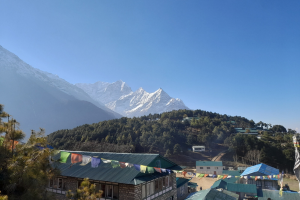

-
Day 4: Trekking to Dole (4200m) - approx. 5 to 6 hours
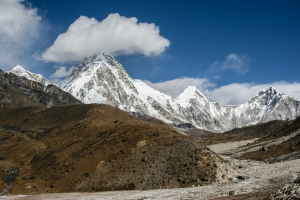
You make a short climb out of Namche and then set off on a long, picturesque trek through the valley of the Dudh Khosi River. Along the way, you’ll enjoy views of Ama Dablam, Everest, Lhotse, Thamserku and other snow-capped peaks, and pass by beautiful stupas. You walk through a pine and rhododendron forest until the route splits. From here, you take a less busy route than the one leading to Everest Base Camp.
The path is narrow at first, but widens and becomes slightly flatter after you have climbed a series of steep steps.
After a few hours, you reach the village of Mong, one of the most beautiful little villages in this region. Not only is it beautifully situated on the crest of a ridge, but it also offers a breathtaking view of the surrounding landscape!
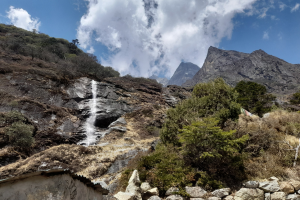
After lunch in Mong, the path descends steeply towards a river. Just before the river, it climbs back up again. In March and April, you can sometimes see frozen waterfalls here – truly spectacular! The rhododendrons are also in bloom at this time, in beautiful shades of red and pink!
A few hours after lunch, you’ll leave the forest and arrive in the picturesque village of Dole. It can be windy here, but the views are absolutely stunning!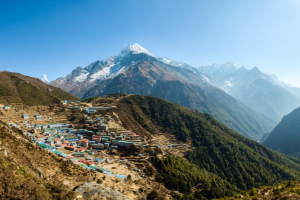
-
Day 5: Trek to Machhermo (4,410 m) – approx. 3 to 4 hours
Yesterday, you crossed the tree line in Dole. Over the next few days, the landscape will therefore be more barren and sparsely vegetated. The trail to Machhermo is fairly easy compared to the previous day. This gives you some time to acclimatise further.
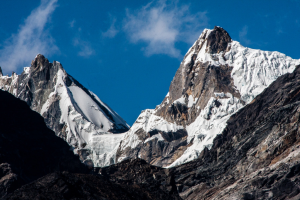
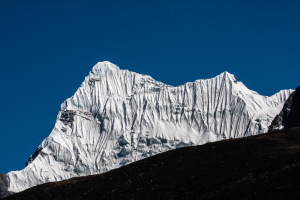
The landscape becomes increasingly beautiful as you climb. Towering above you is Cho Oyu, one of the highest peaks in the world at 8,188 metres! This also makes it the sixth highest mountain in the world!
Machhermo itself isn’t particularly special: it’s the location that makes it special. It lies in a small valley, overlooked by a snow-capped peak. Like Dole, Machhermo is also a summer destination for the Sherpas, who bring their yaks here to graze on the green slopes during the monsoon season.Did you know…
…yaks are perfectly adapted to life at high altitude? Their thick fur, wide hooves and powerful lungs make them ideal for transporting goods in the Himalayas. But did you know that most of the “yaks” you see on the road are actually crossbreeds between a yak and a cattle? Only the male yak is really called a “yak” — the female is called a “nak”!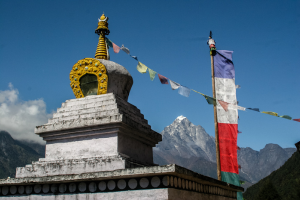
-
Day 6: Trek to Gokyo (4,750 m) – approx. 5 hours
After a short climb from Machhermo, you’ll be rewarded with a magnificent view of Cholatse (6,335 m), Taboche (6,367 m) and Cho Oyu (8,201 m) from a ridge. You then continue climbing gradually through open countryside. In summer, many yak caravans pass through here.
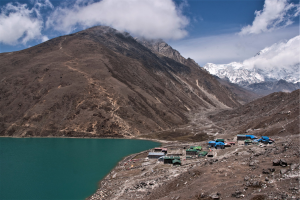
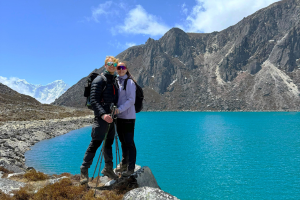
As you gain altitude, the path becomes rougher and the surroundings more arid. You pass the first two Gokyo lakes. In fine weather, the mountains are reflected in these deep blue lakes, which is breathtakingly beautiful!
As you continue walking, you’ll reach the third Gokyo Lake, where the village of Gokyo is situated. You’ll spend the rest of the day in Gokyo to continue acclimatising.
-
Day 7: Gokyo: day hike to the sacred Gokyo Lakes
The six lakes around Gokyo are the source of the river you followed from Lukla. These lakes are sacred to both Hindus and Buddhists.
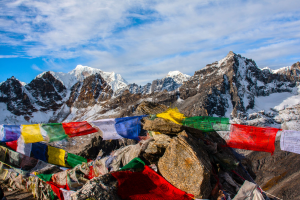
The first lake you come across is Thonak Tsho (4835m). From here, you continue on to the fifth lake, Ngozumba Tsho (4,980 m), situated beneath the icy rocks of Cho Oyu.
At the end of the moraine, there is a viewpoint (5,000 m), Scoundrel’s Viewpoint, from where you have a beautiful view of Cho Oyu and the Ngozumpa Glacier. From here, you can turn back, but if you wish to go further, you can continue on to Ngozumba Ri (5,550m), from where you have a magnificent view of Cho Oyu, the sixth lake and Everest. You may also choose to continue on to the sixth lake: Gyazumba Tsho (5,150m).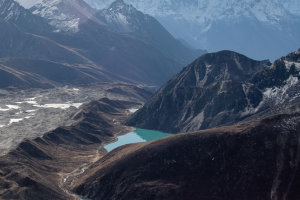
-
Day 8: Climb to Gokyo Ri (5,360 m) – Trek to Phanga (4,300 m) – approx. 7 hours
Today you’ll be getting up early for the climb to Gokyo Ri, a small peak above the lake. The weather is at its clearest in the early morning. The walk isn’t particularly difficult, but the altitude makes it tough and you’ll be walking at a slow pace.
The view from Gokyo Ri makes the climb more than worth the effort: you find yourself amongst four of the world’s 14 highest peaks: Everest (8,848 m), Lhotse (8,516 m), Makalu (8,485 m) and Cho Oyu (8,118 m). But the view is much more than just these giants! You’ll see a horizon full of snow-capped peaks and, below, three of the stunningly blue Gokyo Lakes and the village of Gokyo. You can also see the Ngozumpa Glacier from here – at 36 km long, it’s the largest in the Himalayas!
After taking in these unforgettable sights, you descend back down to Gokyo where you will spend the rest of the day.
Afterwards, you leave Gokyo and walk to Phanga.
-
Day 9: Trekking to Khumjung - approx. 7 hours
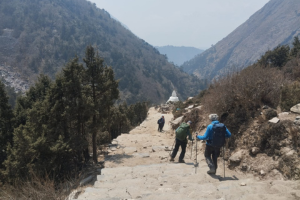
Today’s walk is mainly downhill. You’ll pass through Machhermo and Dole again. You’ll make faster progress than on the ascent.
Khumjung is a village situated in the hidden Khumjung Valley in the Everest region. Be sure to visit the Khumjung Monastery. Inside stands a large statue of Guru Rinpoche. This monastery also houses a skull which, according to them, comes from a Yeti. You can also visit the school founded by Sir Edmund Hillary.
If you have any energy left, you can also visit the other Sherpa village in this valley, Khundu. You walk slightly uphill to Khundu through potato fields. There you can visit Khundu Hospital and Khundu Monastery. The view from above of Khundu and Khumjung is magnificent.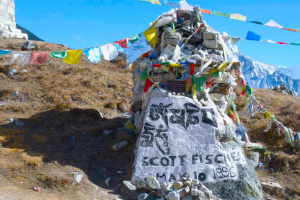
-
Day 10: Trek via Namche to Monjo (2,835 m) – approx. 5 hours
After breakfast, you’ll set off on your walk to Monjo.
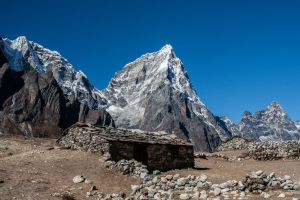
The trail runs mostly through an alpine forest. Once past Phortse Thanga, the path climbs steeply up to Mohan Danda. Along the way, you’ll enjoy stunning views of Lhotse, Ama Dablam and Thamserku. If the skies are clear, you might even catch a glimpse of Mount Everest!
You then follow an easier path along a ridge to Namche Bazaar, which you will recognise. You can take a short break here, but you will then continue your descent.
You head downhill and cross the high suspension bridge. You walk along the river for a while before crossing a few more suspension bridges until you reach Monjo.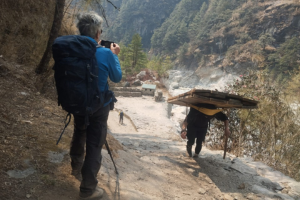
-
Day 11: Trek to Lukla (2,860 m) – approx. 4 hours
Today is the last day of the trek!
After half an hour’s walk, taking in the scenery, you’ll pass through Phakding. Even though you’re retracing your steps, the view of the Khumbu Valley on the descent is completely different!
From Phakding, it’s about a 4-hour walk back to Lukla. As flights only operate early in the morning, you’ll be spending the night in Lukla today.Did you know…
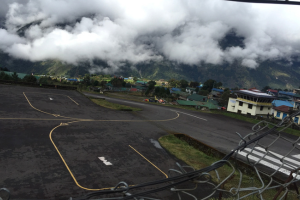
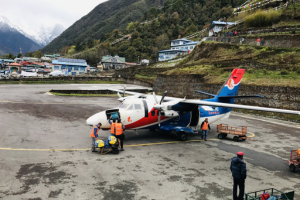
…Lukla Airport is often considered one of the most spectacular and exciting in the world? The short runway is located on a slope and literally ends against a mountainside. The runway is only 527 meters long and runs uphill, so that aircraft can slow down faster when landing. Exciting, but for many travelers also the start of an unforgettable Himalayan adventure!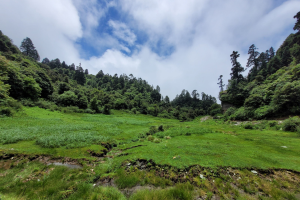
-
Day 12: Flight to Kathmandu
Unfortunately, the end of your journey is drawing near. Early in the morning, you’ll fly back from Lukla to Kathmandu in a small propeller plane. The flight takes about 30 minutes. On the way, you’ll enjoy one last breathtaking view of the snow-capped peaks of the Himalayas.
Beware of domestic flights from Lukla
During high season (October, November, April and May) domestic flights to Lukla do not go directly to Kathmandu. Instead you fly to Manthali/Ramechhap and then by car or bus to Kathmandu in about 4-5 hours.Practical tip:
Domestic flights to Lukla are highly dependent on clear weather. Delays or cancellations are common, especially during high season. So always make sure you have a buffer day at the end of your trip, so you don’t run out of time for your international flight. A good book, some snacks and patience are also not an unnecessary luxury!


Overnight stays
During the Gokyo Trek, you’ll stay in simple but charming teahouses run by local families. In the lower villages, you can usually expect rooms with bedding, hot meals and sometimes even a hot shower. The higher you go, the more basic the facilities become: think basic comforts, shared toilets and limited access to hot water or electricity. This simplicity is part of the adventure, but the warm welcome and hot meals more than make up for it. By staying in local lodges, you also support the community directly – a valuable part of sustainable tourism.
Price information
The price for this Gokyo trek is:
Adults: from € (to be confirmed) per person, based on two people
Inclusive
- Briefing with the trekking guide
- Transfer from your hotel in Kathmandu to Kathmandu Airport
- Domestic flight Kathmandu – Lukla
- 11 nights in standard teahouses
- 11 x breakfast, 11 x lunch, 11 x dinner
- English-speaking guide (salary, insurance, meals, accommodation and transport)
- Porter for your luggage – 1 porter per 2 people – max. 18 kg (including wages, insurance, meals, accommodation and transport)
- The required documents for the region
- Domestic flight Lukla – Kathmandu
Exclusive
- Entrance fees and donations at cultural sites
- Drinks & desserts
- Tip for the guide and porter
- Personal expenses (snacks, Wi-Fi, hot water charge, etc.)
- Visa for Nepal
- International flight tickets
- Stay in Kathmandu, before and after the trek
- Travel and cancellation insurance
- Anything not explicitly stated as included
Practical
The Gokyo trek is a wonderful alternative to the classic Everest Base Camp trek, with the turquoise Gokyo Lakes and the panoramic views from Gokyo Ri as its highlights. This trek offers stunning natural scenery, Sherpa villages and a more peaceful experience on the Everest trail. As this trek involves high altitudes and is physically demanding, thorough preparation is essential—especially for travellers aged 55 and over. On this page, you’ll find answers to the most frequently asked questions, so you can set off on your Himalayan adventure well prepared.
-
When is the best time to go on the Gokyo trek?
The best times of year for the Gokyo trek are spring (March–May) and autumn (October–mid-December). During these periods, the mountain views are usually clear, daytime temperatures are pleasant, and the chance of rain or snow is low. If you’d like to do this trek in winter, that’s also possible. It can be cold and snowy in the mountains, so make sure you bring plenty of warm clothing.
-
How difficult is the Gokyo trek?
The Gokyo trek is moderate to difficult. The physical demands are similar to those of the Everest Base Camp trek, but the route is slightly gentler and more gradual. You’ll walk for an average of 5 to 7 hours a day, with a few longer days when crossing passes or climbing Gokyo Ri. The biggest challenge is the altitude (up to 5,360 m), not the technical difficulty.
-
Is this tour suitable for travellers aged 55 and over?
Yes, provided you are in good physical shape and prepare adequately. A suitable pace, a good guide and enough days to acclimatise make this trip both achievable and enjoyable for active travellers aged 55 and over. Not sure? Feel free to discuss it with us or opt for a programme with extra rest days.
-
What is the maximum altitude on the Gokyo trek?
The highest point is Gokyo Ri, at an altitude of 5,360 metres. You’ll be staying at an altitude of up to 4,790 metres in the village of Gokyo. The route is designed to give your body plenty of time to acclimatise to the altitude.
-
Do I need to have experience with trekking?
Experience of multi-day hikes is useful, but not essential. Good physical fitness, a steady pace and a positive attitude are more important. Our guides will help you every step of the way.
-
Where will I sleep during the trek?
You’ll stay in simple, cosy lodges or tea houses, run by local families. Don’t expect luxury, but do expect a warm atmosphere, nutritious meals and a bed with a thick blanket. You’ll stay in twin rooms; the bathroom may be shared. In some locations, a hot shower is available (sometimes for a fee). Heating is usually limited to the communal area.
-
How cold does it get during the Gokyo trek?
It can get quite cold at night, especially above 4,000 metres. In spring and autumn, night-time temperatures can drop to -10°C or lower. Make sure you have a good-quality down sleeping bag and down jacket! During the day, it is often sunny and more pleasant, but dressing in layers is a must.
-
What about altitude sickness?
The itinerary includes plenty of acclimatisation days, and our guides are trained to recognise the symptoms of altitude sickness at an early stage. Walking at a gentle pace, drinking plenty of fluids and listening carefully to your body are the most important rules.
-
How do I get to the starting point of the hike?
You’ll take a domestic flight from Kathmandu to Lukla, the starting point of the Gokyo trek. In bad weather, this flight can sometimes be delayed, so we allow for this in our schedule. During the peak season (October, November, March, April, May), flights to Lukla depart from Ramechhap (around a 4- to 5-hour drive from Kathmandu).
-
What should I pack for this hike?
We will provide you with a detailed packing list. We will arrange for an experienced guide and porter, so you only need to carry a daypack. Warm clothing, a good-quality sleeping bag (available to hire) and comfortable walking boots are essential.
-
Can I have a shower or recharge my batteries whilst I’m out and about?
At lower altitudes, there are usually (cold or hot) showers, and you can charge your batteries for a small fee. The higher you go, the more limited these facilities become. Bring a power bank for your camera or phone.
-
Is there Wi-Fi or mobile internet available during the Gokyo trek?
Yes, but the connection becomes slower and less reliable the higher you go. In larger villages such as Namche Bazaar and Gokyo, paid Wi-Fi is usually available in the lodges, via services such as ‘Everest Link’. Expect a slower connection that is sufficient for messaging or the occasional email, but less suitable for video calls or streaming.
If you want to stay in touch whilst travelling, you can buy a local SIM card (e.g. Ncell or NTC) upon arrival in Nepal. There is often mobile coverage in the lower parts of the route, but as you climb higher (especially after Namche), the signal becomes weaker or drops out completely.
Tip: Let your family or friends back home know that you won’t be available on certain days, and enjoy a digital detox in the stunning Himalayas!

What others think of our trips

Trekking in Nepal with guides who truly care about you
Our guide Chhoisang Lama and sherpa Gaknaht were wonderful people. Perfect guides for anyone looking to trek in Nepal.

- Mardi Himal trek
- April 2025
Reliable family business with an eye for detail: our beautiful Langtang experience
I highly recommend Nepal Inside Out. It is a family business with a long history of experience in travel and trekking across the region.

- Roundtrip with Langtang trekking
- April 2025
Travel safely and well cared for through Nepal thanks to a fantastic team
We always felt safe and well looked after.

- Roundtrip with Lower Annapurna trek
- March 2025
Discover beautiful Nepal with Nepal Inside Out.
From breathtaking views to beautiful trails and warm evenings together. Nothing is too much trouble, and every effort is made to make the trip truly memorable. Many thanks and highly recommended for anyone wanting to discover Nepal with Nepal Inside Out.

- Roundtrip with Mardi Himal trekking
- November 2024
Nepal with the family? This trip exceeded all our expectations!
Many thanks to the wonderful team at Nepal Inside Out! They went above and beyond to organise our trip through Nepal with great care. The Langtang trek was beautiful, and we were accompanied by a kind guide and two brilliant porters who helped us enormously.

- Roundtrip with Tamang / Langtang valley trekking
An unforgettable family trip with trekking in Nepal during the Easter holidays
We were also so glad to have made this trip as a whole family and to witness the interactions between the local people and our children.

- Family trrip with 4-days trekking
- April 2024

Perfect 3-week tour through Nepal
Maaike and Chuda put together the perfect three-week trip through Nepal for us, including adventurous treks with stunning views, cultural visits with knowledgeable guides, and truly enriching encounters with local Nepali communities. The whole team is well organised and made up of genuinely dedicated people who act quickly whenever something is needed or something has not gone to plan. Highly recommended for anyone looking to book a trip to Nepal.

- Roundtrip with Mardi Himal trekking
- October 2023
Enthusiastic about Nepal?
Make your dream holiday a reality!
Nepal awaits you with its impressive mountains, vibrant culture and warm-hearted people. Whether you’re looking for a relaxing tour, an active trek or a tailor-made family holiday – we’d be delighted to help you get started.
📩 Get in touch with us and start planning today!
View our trips Request travel proposal