
Nepal Underneath The Surface
Travelling In Nepal Takes Longer Than You Think
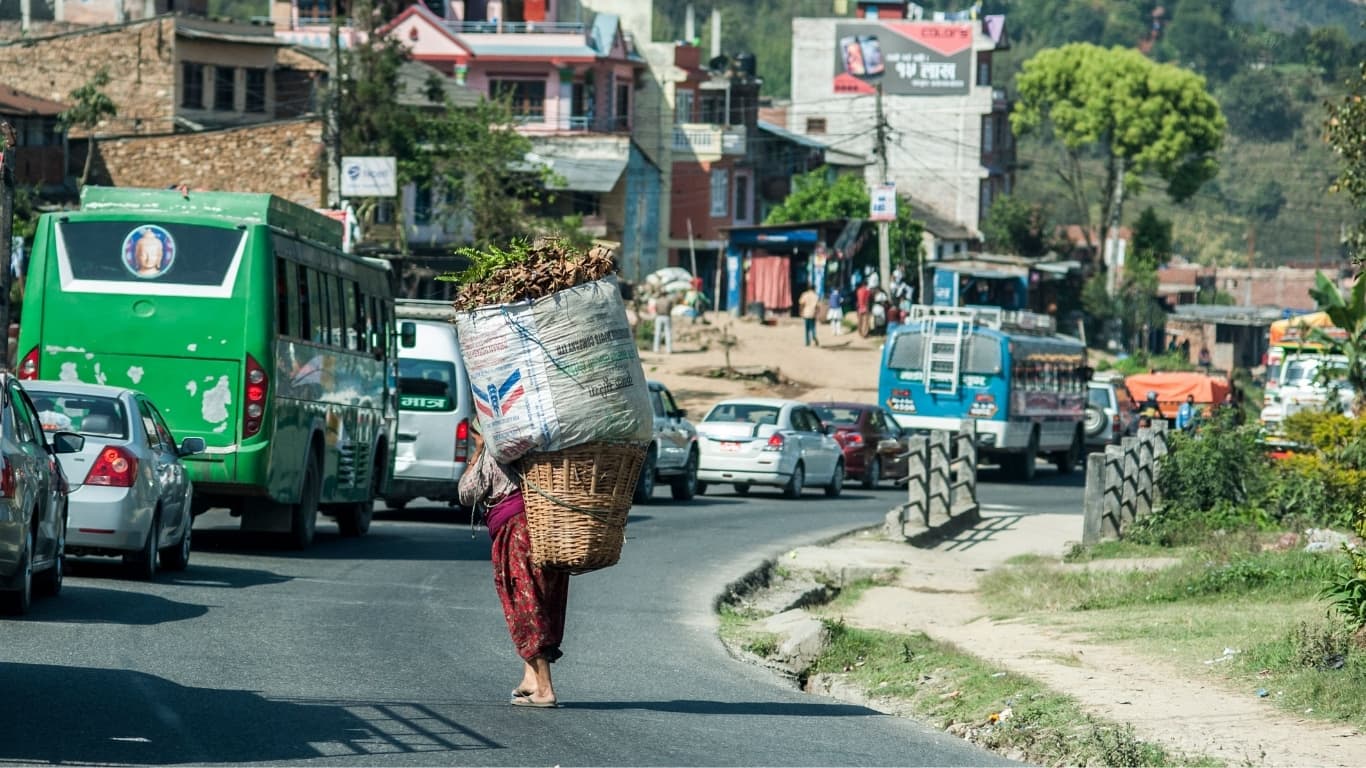
Why travelling in Nepal takes longer than you think
This article is part of our Nepal Beneath the Surface series. Discovering Nepal is about more than the places you visit. It is about understanding the culture, customs and values that shape daily life here. In this series we share insights that help you experience Nepal with greater understanding and respect.
You look at the map. Kathmandu to Pokhara. Around two hundred kilometres. Your guide says six hours. You book a hotel for the evening, plan dinner at seven, maybe an early start the next morning.
Eight hours later, you are still not there. Twelve hours after leaving, you arrive in Pokhara in the dark. The hotel has given your room away. Dinner is over.
This is not an exception. This is Nepal.
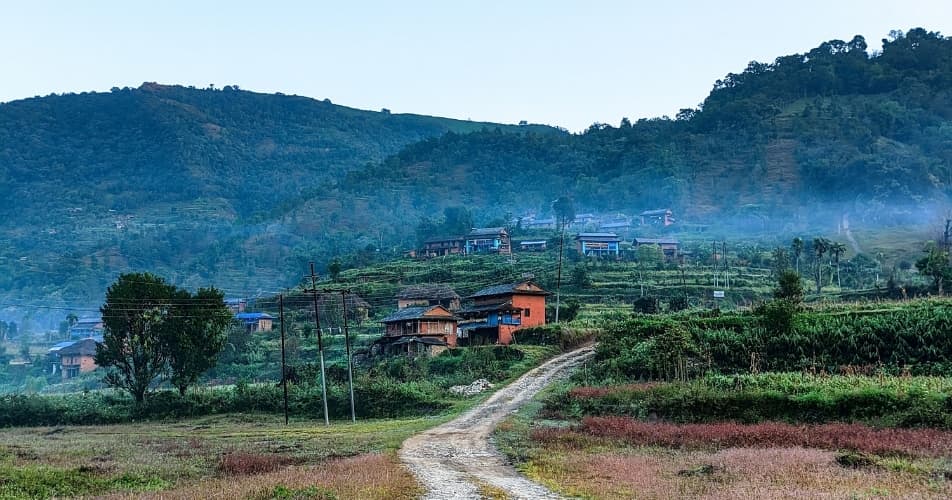
Why maps do not tell the full story
Two hundred kilometres sounds straightforward. In Nepal it is a different calculation entirely. There are no straight roads here. Mountains require switchbacks. Rivers require detours. The actual driving distance is often fifty to a hundred kilometres more than the map suggests.
Then there are the roads themselves. Nepal has a handful of paved main roads, a much larger number of partially surfaced ones, and countless gravel tracks that are slow, dusty and unpredictable. Even the main highway between Kathmandu and Pokhara includes sections that slow traffic considerably.
Roadworks, a broken-down truck blocking a lane, a single-track stretch where lorries need ten minutes to pass each other: none of this appears on Google Maps. And yet almost all of it is there, almost every time.
What weather adds to the equation
During monsoon season, from June to September, landslides can close roads for hours or days. Diversions that drop hundreds of metres and climb back up add hours to a journey that on a dry day would take half the time.
In winter, mountain passes close with snow. Fog slows driving on altitude roads to twenty kilometres an hour or less. Heavy rain makes roads impassable. These are not edge cases. They are structural elements of travelling in Nepal, depending on the season.
The tea stops
Nepali bus drivers stop. Regularly, without announcement, and sometimes longer than you expect. For tea, for a meal, for a rest, to let passengers on or off. These are not items on a schedule. This is simply how buses in Nepal work.
If you know that going in, you can work with it. Bring a book. Get out at the tea stop and talk to people. Look at the landscape. The pauses are not the problem. They become the problem only if you did not account for them.

How to plan realistically
The rule of thumb is simple: add fifty percent to every stated journey time. A six-hour drive, plan for nine. A two-day route, plan for three. A three-week trip, build in at least four or five buffer days.
That sounds excessive until it saves you the first time. Then it is the most logical thing you ever did.
Do not plan two major journeys back to back. Make travel days their own event, not the run-up to something else. That matches Nepal’s actual pace and makes your trip considerably calmer.
If you have a hard deadline, an international flight, a permit office that closes at a fixed time, communicate that clearly and early. ‘I need to be at the airport by nine. When should we leave?’ Then build a larger buffer than you think you need. For a ten-thirty flight, you want to be in Kathmandu by seven, not nine.
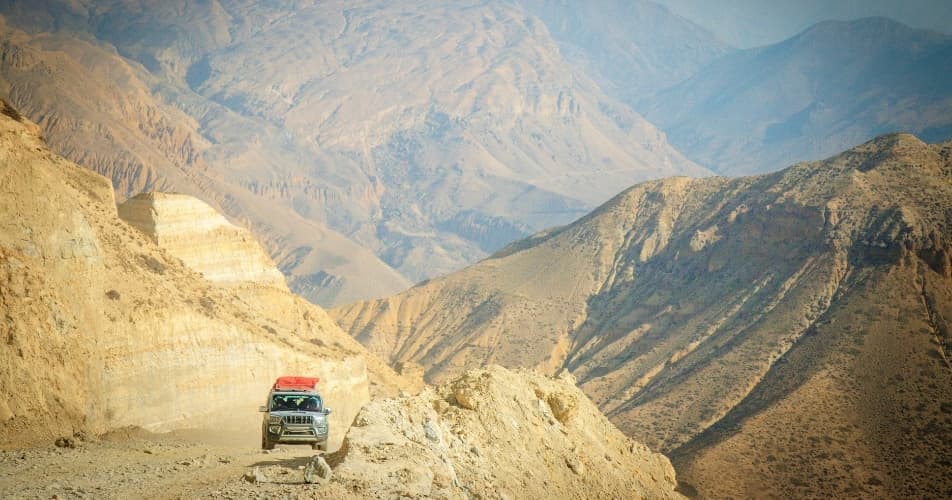
What that extra time gives you
There is another way to look at longer journey times. Many travellers say afterwards that their best memories of Nepal were not the planned experiences but the unexpected ones. The conversation with a fellow passenger that stretched to an hour. The festival in a village where the bus had stopped for a repair. The sunset they saw because the journey ran long and they happened to be at the right place at the right moment.
You cannot plan those moments. They happen in the space that delay leaves open. If your schedule is too tight, you rush past them. If you have built in time, you find yourself right in the middle of them.
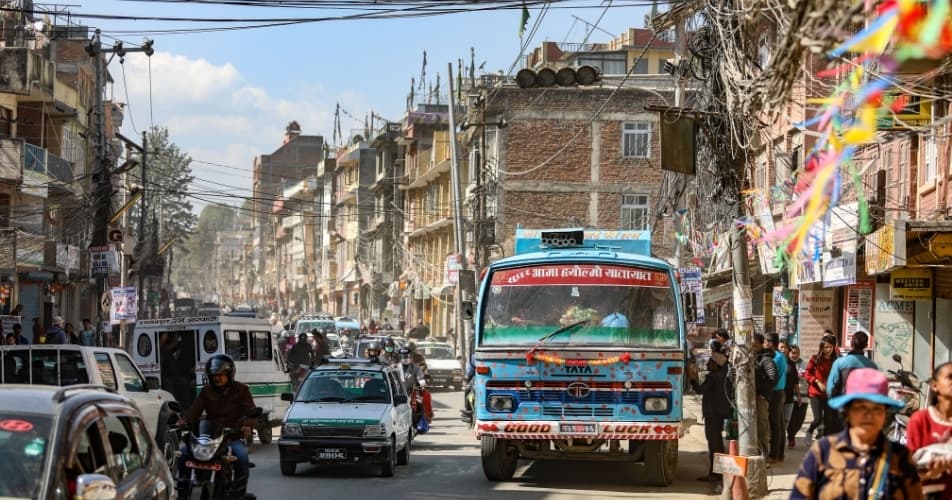
The pace of Nepal
Nepal does not move fast. That is partly infrastructure, partly culture, partly geography. Fighting it costs you energy and enjoyment. Moving with it, you discover that travelling here has a quality that is difficult to find on a tightly managed itinerary.
You stop more. You look longer. You start conversations. You notice things you would miss on a faster route. The country unfolds more slowly, and because of that, more fully.
The drive to Pokhara takes nine hours. Somewhere along the way the bus stops for tea in a village, and the man sitting next to you tells you about his daughter studying in Kathmandu, and outside the sun goes down behind the Annapurna range. That was not in the plan. That is exactly why you came.
Enthusiastic about Nepal?
Make your dream holiday a reality!
Nepal awaits you with its impressive mountains, vibrant culture and warm-hearted people. Whether you’re looking for a relaxing tour, an active trek or a tailor-made family holiday – we’d be delighted to help you get started.
📩 Get in touch with us and start planning today!
View our trips Request travel proposal