
Nepal Underneath The Surface
Why Time Works Differently in Nepal (And How to Adapt)
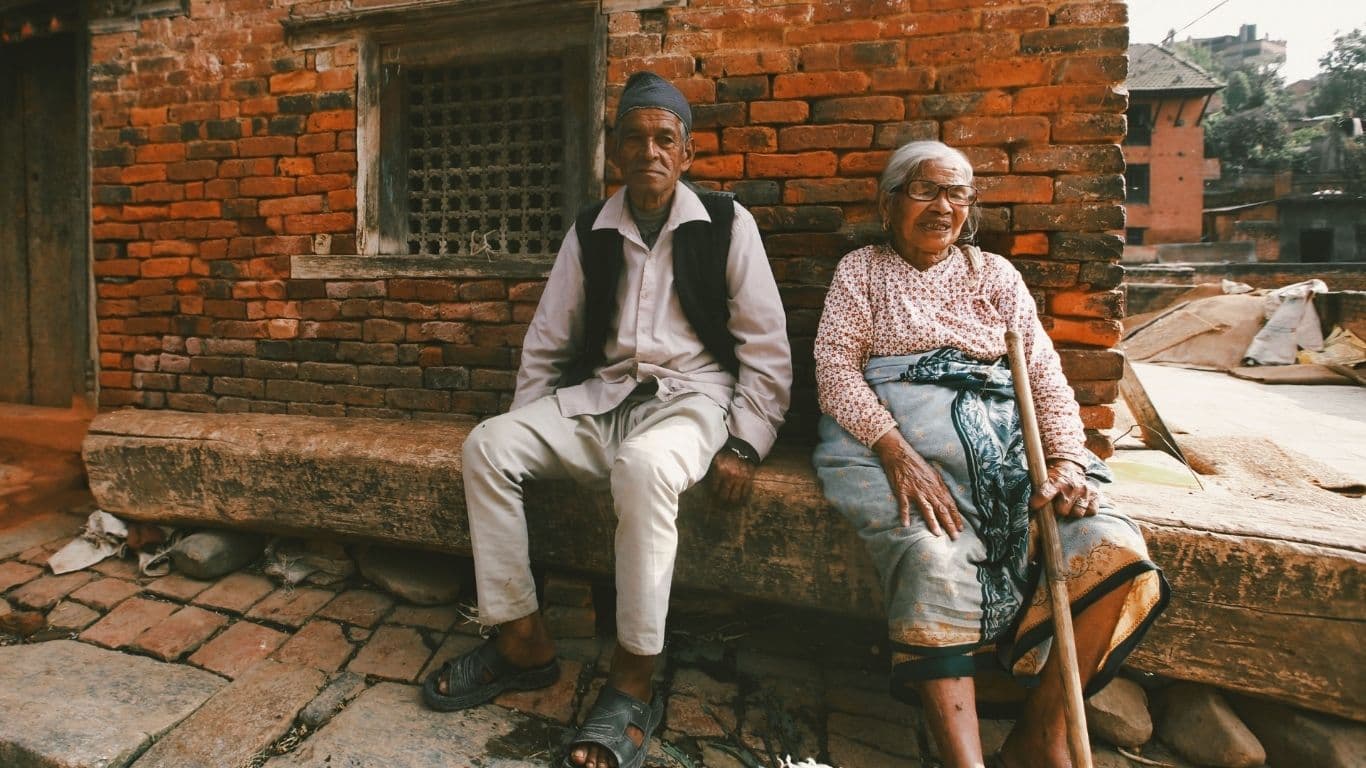
This article about the concept of time in Nepal is part of our Nepal Beneath the Surface series. Discovering Nepal is about more than the places you visit. It is about understanding the culture, customs and values that shape daily life here. In this series we share insights that help you experience Nepal with greater understanding and respect.
Your guide told you the drive to Pokhara would take five to six hours. Eight hours later you are still on the bus, watching terraced hillsides fade slowly into the evening light, wondering whether you misunderstood something.
You did not. But you are travelling through a country where time carries a different meaning than you are used to at home. Not as a result of carelessness or unreliability, but as an expression of a cultural logic that has been in place for centuries.
In this article we go deeper into that logic. Not just to prepare you practically for delays and flexibility, but to help you understand what is actually behind Nepal time. Because once you see it clearly, you start looking at a great deal more than just the bus differently.

Two ways of thinking about time
In western cultures, and particularly in northern Europe, time is something you manage. You plan it, divide it and protect it. Appointments are commitments. Being late is a minor transgression. Time is money is not just a saying. It is an organising principle.
Sociologists call this a monochronic relationship with time: you do one thing at a time, you follow a schedule, and punctuality shows respect. The clock leads.
Nepal has a largely polychronic time culture. That means multiple things at once, schedules as rough guidelines, and the relationship in the present moment taking precedence over the clock. Time is not managed here. It flows. And you adapt to what is, not to what you had planned.
Neither system is better. Both are adaptations to very different circumstances. But when you arrive with a monochronic mindset in a polychronic culture, friction is almost inevitable. Understanding that friction is the first step to moving through it.

What the infrastructure has to do with it
Part of the explanation is entirely concrete. Nepal is a mountain country whose infrastructure is in constant battle with nature. Mountain roads are interrupted by landslides, roadworks and political protests. Monsoon rains close passes for weeks at a time. Kathmandu traffic is a living organism that answers to no schedule. Fog grounds flights. Weather is not ignored here. It is factored in.
When you live in that kind of environment, you learn early that rigid time commitments rarely hold. A six-hour journey estimate is an optimistic one for ideal conditions. Everyone knows that ideal conditions are rare. The buffer is already implicit, even if it is never stated out loud.
What a Nepali person means when they say six hours is really: six hours if everything goes well, but expect more. They assume you know that roads close, that drivers stop for tea, that unexpected passengers get picked up along the way. It is not meant to mislead. It is a different way of communicating about uncertainty.

People come before schedules
But infrastructure is not the only explanation. There is a deeper cultural hierarchy of values behind it.
In Nepali culture, relationships are more sacred than schedules. If a friend arrives at your door when you are about to leave, you stop. You put the kettle on. You talk. The appointment can wait. The relationship cannot. This is not inattentiveness. It is a deliberate choice, grounded in the belief that people matter more than plans.
You see the same thing in how people approach service. A tailor who says your clothes will be ready tomorrow means: I will do my best to have them ready tomorrow. If something comes up, someone dropping by, a problem with the fabric, a family matter, it shifts by a day. The customer understands that. Or rather, the customer who grew up here understands that.
As an outsider, you do not feel that logic immediately. You hear tomorrow and you think tomorrow. That is understandable. But it helps to know that in many contexts in Nepal, tomorrow means soon, probably tomorrow, but without a hard guarantee.
A spiritual layer
There is also a spiritual dimension to this. Nepal is a deeply religious society, with a blend of Hinduism and Buddhism woven through the fabric of daily life. Both traditions carry a sense that people do not control everything. You make plans, but you hold them loosely. The future unfolds the way it unfolds.
This is not fatalism. It is humility about the limits of human control. And it has a direct effect on how people approach schedules, deadlines and promises. You do your best. But you do not swear by an outcome that depends on a thousand factors you cannot manage.
For someone accustomed to contracts, guarantees and service level agreements, this feels unfamiliar. But once you see it as a different way of holding uncertainty, it is less strange than it first appears.
Bistari, bistari
There is a phrase you will encounter throughout your time in Nepal: bistari, bistari. It means slowly, slowly. You hear it as encouragement on a steep section of trail. You hear it as quiet philosophical commentary when something is taking longer than expected. You hear it as a calm response to a question asked with slightly too much impatience.
Bistari, bistari is more than a phrase. It is an attitude. The conviction that hurrying rarely improves anything, that things move at their own pace, and that your energy is better spent being present than pushing. In a culture where mountains surround you and life has followed the rhythm of seasons and harvests for generations, that is not naivety. It is wisdom.
The interesting thing is that many travellers take that phrase home with them. Not as a souvenir, but as a reflex. When the traffic is stuck, when the meeting runs long, when the train is delayed. Bistari, bistari. Breathe. It goes the way it goes.

How to prepare practically
All of this is useful as cultural understanding, but you also want to know how to plan a trip through Nepal without unnecessary stress. That is fair. Here is what works.
Add a buffer of thirty to fifty percent to every stated journey time. A six-hour drive, plan for nine. Do not book tight connections between two journeys or between transport and a flight. Book an overnight stop between major travel legs wherever you reasonably can.
For domestic flights in Nepal, and especially for international flights out of Kathmandu, arrive three hours or more early. Flights are cancelled or rescheduled without much notice, and if you are cutting it close you will miss yours.
When punctuality at a specific moment genuinely matters, say so directly and kindly. Not as a complaint, but as information. I have a flight at ten thirty. I need to leave by nine at the latest. Can you be here at a quarter to nine? That works far better than hoping the agreed time will automatically be treated as firm.
Plan the rest of your day around one main activity, with everything else kept loose. If something runs over, you have room. If everything goes to plan, you have an unexpected quiet hour as a bonus.
And always bring something for the waiting moments. A book, music, the willingness to start a conversation. Waiting in Nepal has a very different quality from waiting on a station platform at home. There is always something to see, always someone willing to talk.
What it teaches you, if you let it
There is a shift that many travellers describe after spending real time in Nepal. At the beginning there is frustration. The bus is late. The guide is not there yet. The clothes are not ready. You do not know when things are going to start.
Then, somewhere after a day or two, something begins to change. You notice that waiting is not automatically wasted time. You find yourself in a conversation at a bus station that you would never have started if you had been on schedule. You sit for an hour at a teahouse and watch a mountain village wake up. Not because it was planned, but because you were there and you had the time.
What western culture calls wasting time, Nepali culture calls taking time for what matters. That sounds like a slogan. But somehow you only really feel the difference when you are in the middle of it.
Many travellers tell us afterwards that the unexpected moments were the ones that stayed with them longest. The unplanned invitation to a family dinner. The stranded minibus that became an evening with the people of a village. The trekking day that ran long because the guide stopped to talk with an old acquaintance, and suddenly you knew that person too.
Those moments are not made. They grow in the space that flexibility leaves open.
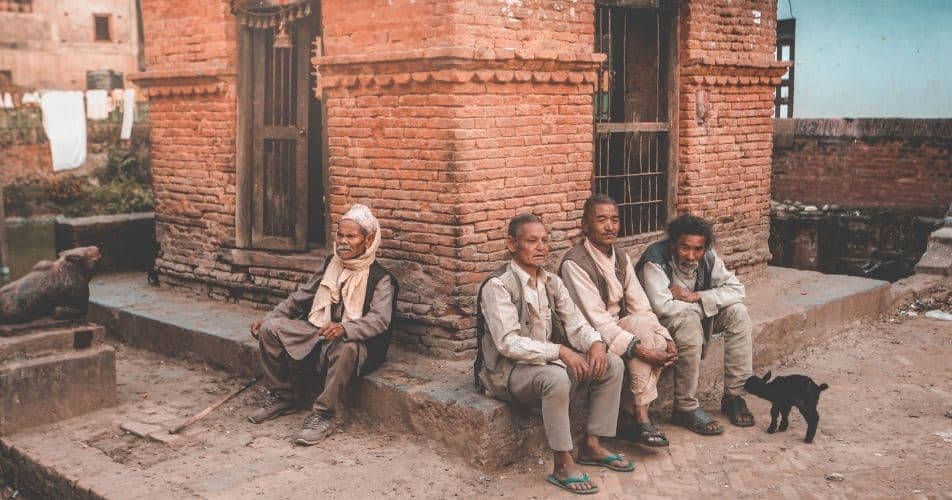
What we do at Nepal Inside Out
We know both worlds. We know you have a flight to catch, a budget that ends and an itinerary you genuinely want to follow. And we know that Nepal does not always hold to that itinerary.
So buffer time is built into everything we do as standard. We do not make promises about journey times we cannot keep. We are honest about when an estimate is firm and when it is approximate. And we prepare you before you arrive for what to expect, so a delay is not a surprise but simply part of the journey.
We want you to feel structured enough to feel safe, and open enough to let Nepal be what it is. That balance is something we try to find in every itinerary we build.
Bistari, bistari
Time does not actually work differently in Nepal. Clocks tick the same. What is different is the meaning attached to time. The value placed on punctuality. The relationship between schedule and person, between plan and moment.
You can spend your trip frustrated that Nepal does not adapt to your pace. Or you can adapt your pace a little to Nepal and discover what is waiting in the gaps.
Yes, the bus will be late. Yes, tomorrow is an approximation. Yes, your guide will be there at five past eight instead of eight. But you will also have a conversation you did not expect. You will see a sunset you would have missed. You will stand at a small crossroads in the mountains and wait, and while you waited everything was actually exactly right.
Bistari, bistari. It is not just a phrase. It is a different way of being in the world. And for many travellers, it is one of the things Nepal leaves behind.
Enthusiastic about Nepal?
Make your dream holiday a reality!
Nepal awaits you with its impressive mountains, vibrant culture and warm-hearted people. Whether you’re looking for a relaxing tour, an active trek or a tailor-made family holiday – we’d be delighted to help you get started.
📩 Get in touch with us and start planning today!
View our trips Request travel proposal