
Sustainable Travel in Nepal
How Your Trip Contributes to Forest Restoration
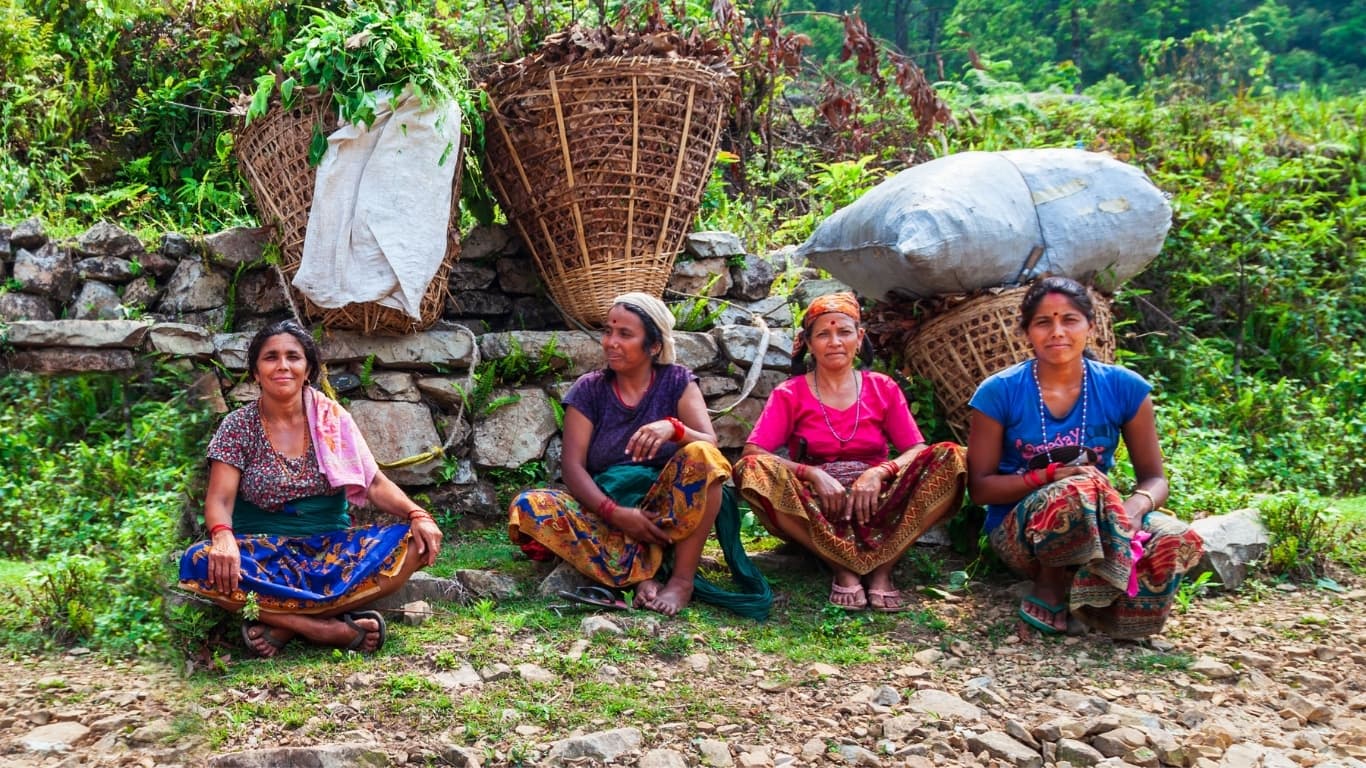
Travel changes places. We wanted ours to change them well.
No honest tour operator can claim that travel is neutral. People move through landscapes, communities and ecosystems. They leave things behind and take things away. The question is not whether travel has an impact but what kind of impact it has, and whether the people designing the journey have thought seriously about that.
At Nepal Inside Out, we have thought about it since we started. We choose locally owned accommodation. We pay guides and porters fairly. We work in small groups, move slowly, and try to ensure that the communities our travelers pass through are genuinely better off for their presence. These are not marketing claims. They are operational choices we make every time we design a trip, so we contribute to sustainable travel in Nepal.
From the beginning of 2026, we added one more. Every client who travels with Nepal Inside Out now contributes directly to The Green Intelligence, a Nepal-based organisation restoring community forests across the country. It is not an offset scheme. It is not a donation to a fund that may or may not reach Nepal. It is a specific, trackable contribution to forest restoration work happening on Nepali land, in partnership with Nepali communities.
This piece explains what The Green Intelligence does, why we chose this partnership, what your contribution funds, and how you can go further if this work matters to you.
What is happening to Nepal’s community forests
Nepal’s community forests are not background scenery. They are working ecosystems that directly support the livelihoods of millions of people. They provide firewood, medicinal plants, timber for building, fodder for livestock, soil stability on steep hillsides, and water retention across landscapes where the relationship between forest cover and water availability is direct and measurable.
These forests are under pressure. Climate change has altered rainfall patterns and increased the frequency of drought. Population growth and economic hardship have intensified the demands placed on forest land. Decades of monocultural planting practices, prioritising fast-growing single species over diverse, productive forest ecosystems, have left large areas of land degraded and less able to support the communities that depend on them.
The communities who feel this most are not abstract statistics. They are the people in the villages you pass through when you trek through the hills. The family who hosted you in a teahouse. The farmer whose terraced fields you walked alongside. The children you saw at the school by the trail. Their food security, their income and their long-term wellbeing are connected, in ways that are both ancient and urgent, to the health of the forests around them.
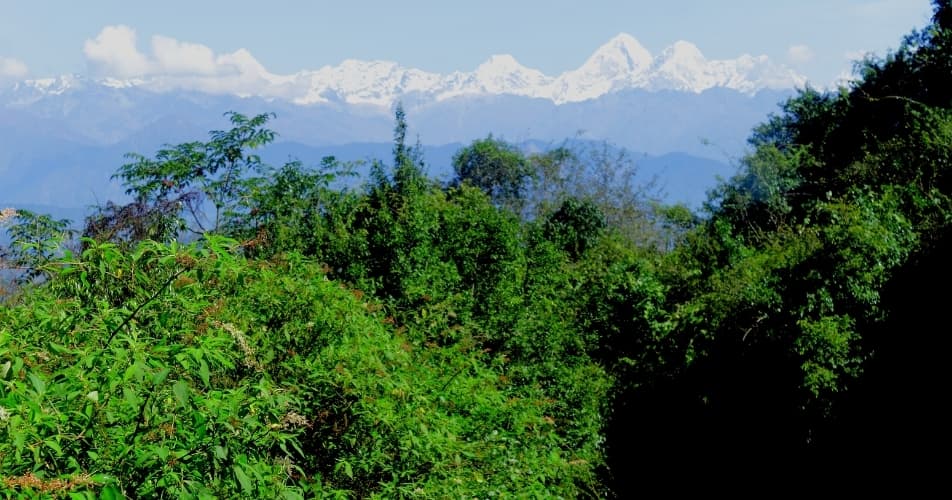
Who The Green Intelligence is and how they work
The Green Intelligence is not an international NGO managing a reforestation programme from a distance. They are a Nepal-based organisation that works on the ground, in direct partnership with local communities, municipalities and community forest user groups, the formal bodies through which Nepali communities collectively manage their own forest land.
Their approach is worth understanding because it is what sets it apart from simpler tree-planting schemes. They do not arrive with a species list and a planting target. They start with the community: what do people need from this forest? What food crops would generate income? What species will restore soil quality and support biodiversity? What does the specific geography of this land require?
The planting method that results from this process is layered. Food-producing trees provide direct income at harvest time. Biodiversity species support insects, birds and soil organisms. Soil-restoring plants rebuild the ground conditions that allow everything else to thrive. The forests that result are not monocultures. They are living, productive ecosystems that generate value for the people who manage them over the long term.
Their projects span several regions of Nepal, including Ramechhap, Dhulikhel, Chitwan and Bigu. In Ramechhap, a community forest that had been largely stripped bare by overgrazing, drought and monocultural planting was replanted in partnership with the local forest user group. Eleven thousand seedlings across twenty hectares. Productive species including mango, ritha and neem will generate income for community members at harvest. Wildlife is expected to return as the forest canopy recovers.
This is what the contribution from your trip funds. Not a tree planted in a database. A forest being rebuilt, by people who will live alongside it, in a landscape that will be measurably different because of it.
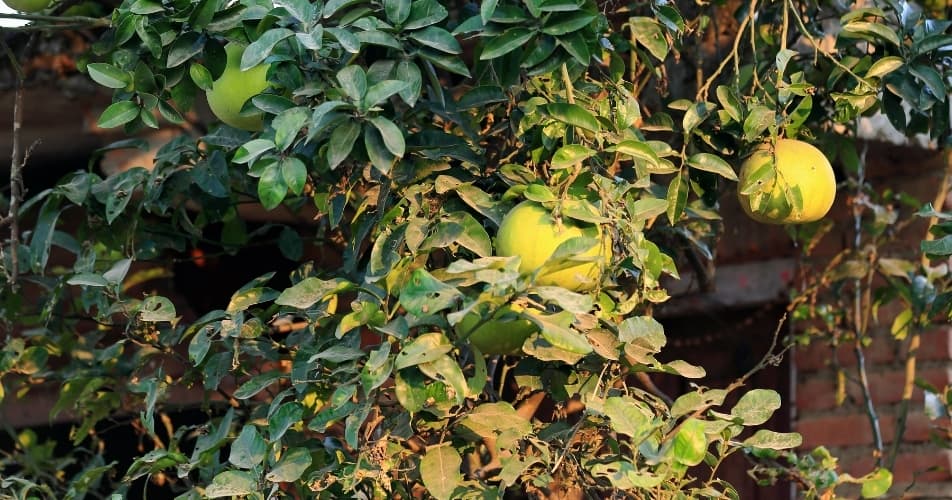
Why we chose this partnership
We were looking for something specific. We did not want a carbon offset scheme where money disappears into a global fund and the connection to Nepal is tenuous. We did not want a partnership with an international organisation whose understanding of Nepali land and communities is filtered through a distant headquarters. And we did not want something performative, a logo on a website that does not reflect a genuine operational commitment.
The Green Intelligence met every criterion we cared about. They are based in Nepal. They work with communities rather than on behalf of them. The money stays in the country. The impact is trackable and place-specific. And their understanding of how Nepali community forests function, economically and ecologically, is deep and locally grounded.
This partnership is also an extension of something we have always believed: that the best travel is travel that is good for the places it moves through. Locally owned accommodation, fairly paid guides, small groups, slow pace, genuine cultural engagement. The Green Intelligence partnership adds one more dimension to that commitment. The forests your journey passes through will be in better condition, for the communities who live in them, because you traveled with us.
What your contribution funds
From 1 January 2026, every client who travels with Nepal Inside Out contributes NPR 500 to The Green Intelligence as a standard part of the trip. You do not need to arrange anything. It is simply part of how we operate now.
We track where the money goes and will share updates with you after your trip so you can see the specific impact your contribution made. Which forest. Which community. Which species were planted. How many trees. This is not vague goodwill. It is a specific, documented contribution to specific, documented work.
Every travel proposal we send includes extra information of The Green Intelligence project. If this work resonates with you, you can choose to contribute beyond the NPR 500 included in your trip. You can add that to the price of your trip. Your donation goes then directly to the same on-the-ground forest restoration that your trip already supports.
Plant a tree yourself
For clients traveling to areas near Namobuddha, Panauti or Balthali, we are planning a hands-on tree planting activity in collaboration with The Green Intelligence. You plant a tree yourself, in a community forest, as part of your journey. In soil that was degraded. In a landscape being brought back to life. Alongside the people whose future is connected to that forest.
It is a small gesture in the scheme of things. But it is a real and lasting one. Most souvenirs from a journey fade or get packed into a box. A tree in a community forest in the hills above the Kathmandu Valley does not.
This activity is being confirmed as part of our 2026 planning. If you are interested in including it in your trip, let us know when you get in touch. We will do what we can to make it part of your itinerary.

Being honest about what travel can and cannot do
We are not going to tell you that booking a trip with Nepal Inside Out solves the environmental pressures facing Nepal’s forests. It does not. Travel has an ecological footprint, and anyone who tells you otherwise is not being straight with you.
What we can say is this. Traveling with locally owned operators, in small groups, at a pace that allows genuine engagement, through communities that benefit from your presence, is already a more responsible form of tourism than many alternatives. Contributing to community forest restoration adds one more layer to that. The NPR 500 contribution is small. Multiplied across every client who travels with us, it becomes something more substantial. And for the communities in Ramechhap or Dhulikhel or Chitwan whose forests are being restored, the difference is not abstract. It is the difference between degraded land and productive land. Between lost income and available income. Between a forest that cannot support wildlife and one that can.
We believe that is worth doing. And we believe that travelers who choose to go further, by donating directly to The Green Intelligence, are participating in something genuinely valuable for the country they are visiting.
If you have questions about the partnership, how contributions are tracked, or what the work looks like on the ground, we are glad to talk through it. Get in touch when you are ready to plan your trip to Nepal.
Enthusiastic about Nepal?
Make your dream holiday a reality!
Nepal awaits you with its impressive mountains, vibrant culture and warm-hearted people. Whether you’re looking for a relaxing tour, an active trek or a tailor-made family holiday – we’d be delighted to help you get started.
📩 Get in touch with us and start planning today!
View our trips Request travel proposal