
Nepal Underneath The Surface
Spirituality Is Everywhere In Nepal
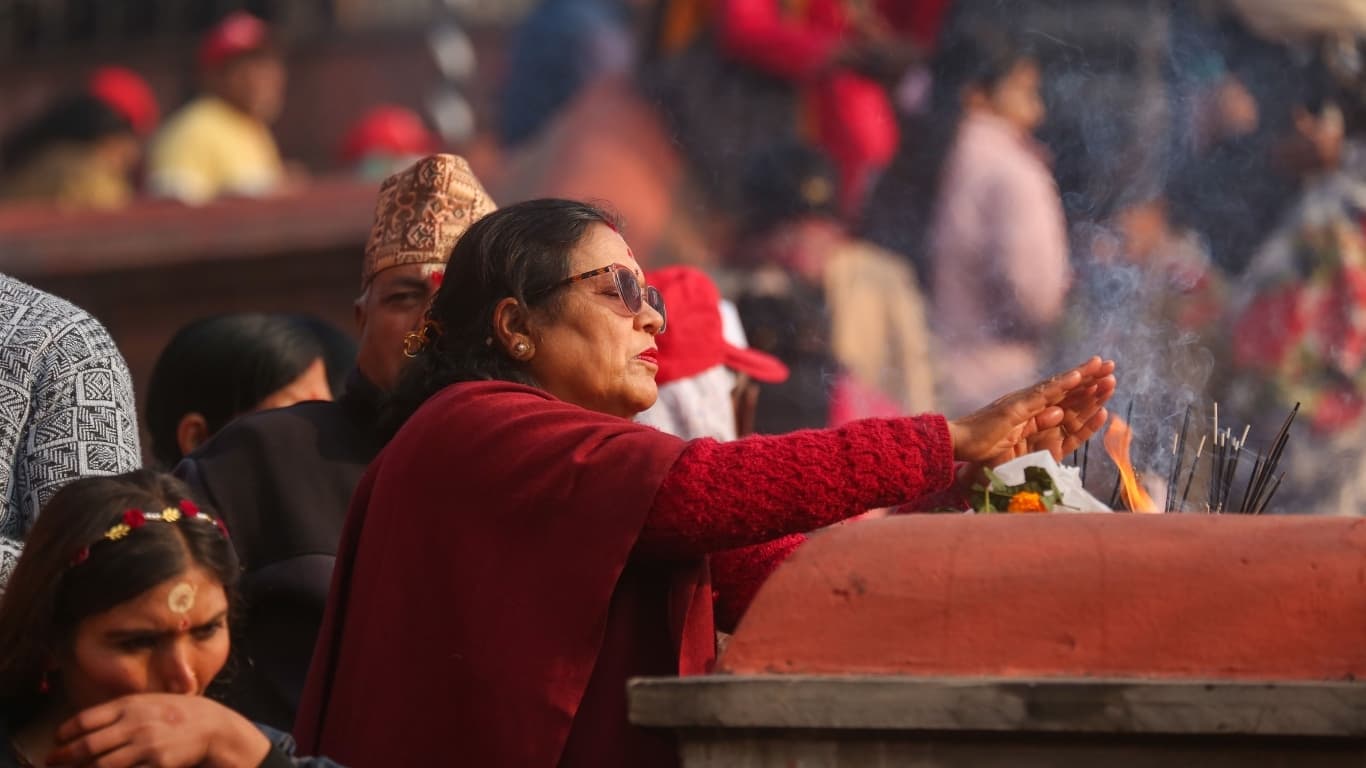
Why spirituality is everywhere in Nepal
This article about spirituality in Nepal is part of our Nepal Beneath the Surface series. Discovering Nepal is about more than the places you visit. It is about understanding the culture, customs and values that shape daily life here. In this series we share insights that help you experience Nepal with greater understanding and respect.
You walk through a village at sunrise. A woman sweeps her veranda and then sprinkles water across the step in front of her door. She pauses, bows lightly toward the rising sun.
A shopkeeper closes for an hour during a prayer service. Your guide touches every religious object you pass, sometimes whispering, sometimes in silence. In the evenings, the voices of monks fill the valley.
You are in Nepal, where spirituality is not something that happens on Sundays. It lives inside every day, every action, every moment. That can feel beautiful, and sometimes disorienting if you are not prepared for it. Understanding why it is so present changes how you see it. Spirituality in Nepal, it is really everywhere.

Hinduism and Buddhism, woven together
Nepal is a predominantly Hindu country, with around eighty percent of the population practising Hinduism. Buddhism accounts for roughly ten percent. But those two traditions do not stand in opposition here. They live alongside and through each other.
Most Nepalis pray at both Hindu temples and Buddhist monasteries. They observe both Hindu and Buddhist festivals. They integrate both philosophies into their daily lives without experiencing any contradiction. A temple and a stupa can stand metres apart, and the same people visit both.
For western visitors accustomed to sharper divisions between religions, this can be surprising. But in Nepal, that blending of traditions is not confusing. It is simply how things work here.
Alongside those two major traditions there are also layers of folk spirituality: ancestor veneration, belief in protective spirits, shamanic practices in remote areas. These do not stand apart from Hinduism or Buddhism. They are woven through them, part of a living, multi-layered spiritual culture.

How spirituality lives in daily life
Many Nepalis begin their day with a spiritual act. Prayer, a touch of a religious object by the door, a slight bow toward their parents before leaving the house. Small rituals that give structure and meaning to the start of the day.
The greeting namaste, which you hear everywhere, means literally: I honour the divine in you. It is not a routine hello. It is a spiritual acknowledgement of the other person. Knowing that, it sounds different.
Meals sometimes begin with a moment of stillness or gratitude. Businesses display images of gods or goddesses in prominent positions. Some shopkeepers pause for a prayer time. Major decisions, about a marriage, a move, a new business, are sometimes aligned with an auspicious moment in the spiritual calendar.
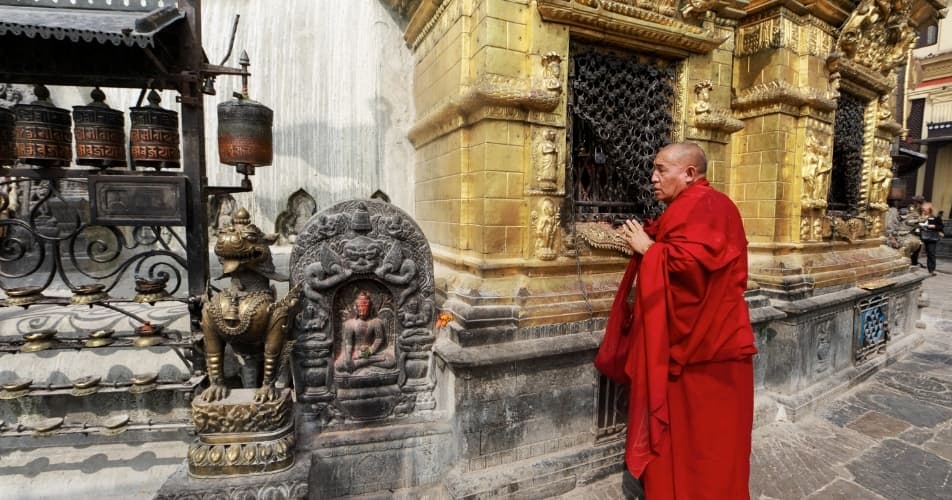
You see it in the objects around you too. Prayer flags flutter above mountain passes and rivers. Mani wheels are touched by people passing by. Shrines stand in homes, along roads, at crossroads. These are not decorations. They are actively used objects with a daily purpose.

Why it is so present
For most Nepalis, faith is not something you put on once a week and hang up again during the week. It is the lens through which life is understood. How do you handle difficulty? Karma. Why do things sometimes go differently than planned? Humility about what you can control. How do you approach old age and death? As part of a larger cycle.
The concept of karma, the understanding that actions have consequences reaching beyond the immediate moment, shapes behaviour in subtle ways. If you believe your intentions matter, not just your results, you act differently. You are slower to blame others. You accept difficult circumstances more easily. You have patience.
Spirituality also creates community. Religious ceremonies are social gatherings. Festivals bring families together. Temples are public spaces where people meet, not just to pray but to talk, eat and be together. Taking part in a spiritual practice here means belonging to something larger than yourself.
What you will encounter as a traveller
If you arrive at a temple during a puja, a prayer ceremony, you will hear bells, chanting, smell incense, and see priests making offerings. That is not a performance for tourists. It is the ordinary religious life of the neighbourhood.
Monastery chanting at sunrise or sunset is rhythmic and meditative. You can listen respectfully from outside. Pilgrimages to sacred places are open to observers if you position yourself quietly and without intruding.
In the Kathmandu Valley, the major sites, Boudhanath, Swayambhunath, Pashupatinath, are more than tourist landmarks. They are living religious centres that people visit daily. You feel that most clearly on an ordinary morning, rather than at the busiest time of day.
How to engage with respect
Remove your shoes before entering a temple or monastery. Cover your shoulders and knees in sacred spaces. Ask before photographing ceremonies or people. Do not touch religious objects unless invited to do so. Be quiet and observant during ceremonies. Accept blessings graciously when they are offered to you.
Do not turn your back to images of deities. Do not sit higher than religious figures or sacred texts. And do not treat holy places as a backdrop for a photograph. That last point sounds strict, but it is simply respect for places that carry real daily significance for the people who use them.
You do not need to be religious yourself to appreciate Nepal’s spiritual culture. What you need is openness, respect for beliefs that differ from your own, and the willingness to observe without judging.
What it does to you
Many travellers say afterwards that the spiritual layer of Nepal is one of the things that stayed with them most. Not because they converted to another religion, but because they experienced a culture where meaning, community and daily life are inseparable.
Once you see it, you see it everywhere. Why the shopkeeper pauses and bows before his small shrine. Why your host family takes a moment before eating. Why someone touches the prayer flags on a mountain pass before walking on.
They are small things. They say something large about how life is understood here.
Enthusiastic about Nepal?
Make your dream holiday a reality!
Nepal awaits you with its impressive mountains, vibrant culture and warm-hearted people. Whether you’re looking for a relaxing tour, an active trek or a tailor-made family holiday – we’d be delighted to help you get started.
📩 Get in touch with us and start planning today!
View our trips Request travel proposal