
How Nepali Communities Process Tragedy
Grief, Resilience, and the Power of Continued Presence
August 26, 2026: When the Mountain Breaks
On August 26, 2026, a glacier broke in Tibet. The flooding that followed tore through the Bhote Khoshi river, through Rasuwa, through Nuwakot and all the small villages along the river. Houses floated away. Bridges collapsed. Lives were lost. Infrastructure dissolved in minutes.
I watched from Kathmandu as news came in. The immediate question from many Western friends and colleagues was: “Should tourism stop? Should we cancel trips? Should we give them space?”
That question, well-intentioned as it is, reflects something important about the cultural divide between how we in the West process grief and how Nepali communities do.
The Western Grief Response: Isolation as Respect
In Western culture, our default response to tragedy is to step back. When someone loses a loved one, we give them “space to grieve.” We cancel celebrations. We pause normal life. The idea is: people need quiet, privacy, and time to process loss away from the world.
This assumption runs deep. After the 2015 earthquake in Nepal, some Western operators cancelled trips for weeks or months. The reasoning was compassionate: Nepal is suffering, so tourists should stay away.
But here’s what I’ve learned living in Nepal: this is not how Nepali communities heal.
What Nepali Spirituality Actually Teaches About Death
Both Buddhism and Hinduism,the spiritual traditions that shape how Nepali people understand life and death,teach something that profoundly changes how communities respond to loss.
In Hindu philosophy, death is not an ending. It’s a transition. The soul (atman) is eternal. Death is one stage in an infinite cycle of rebirth. This isn’t abstract theology for Nepali people,it shapes how they actually experience loss.
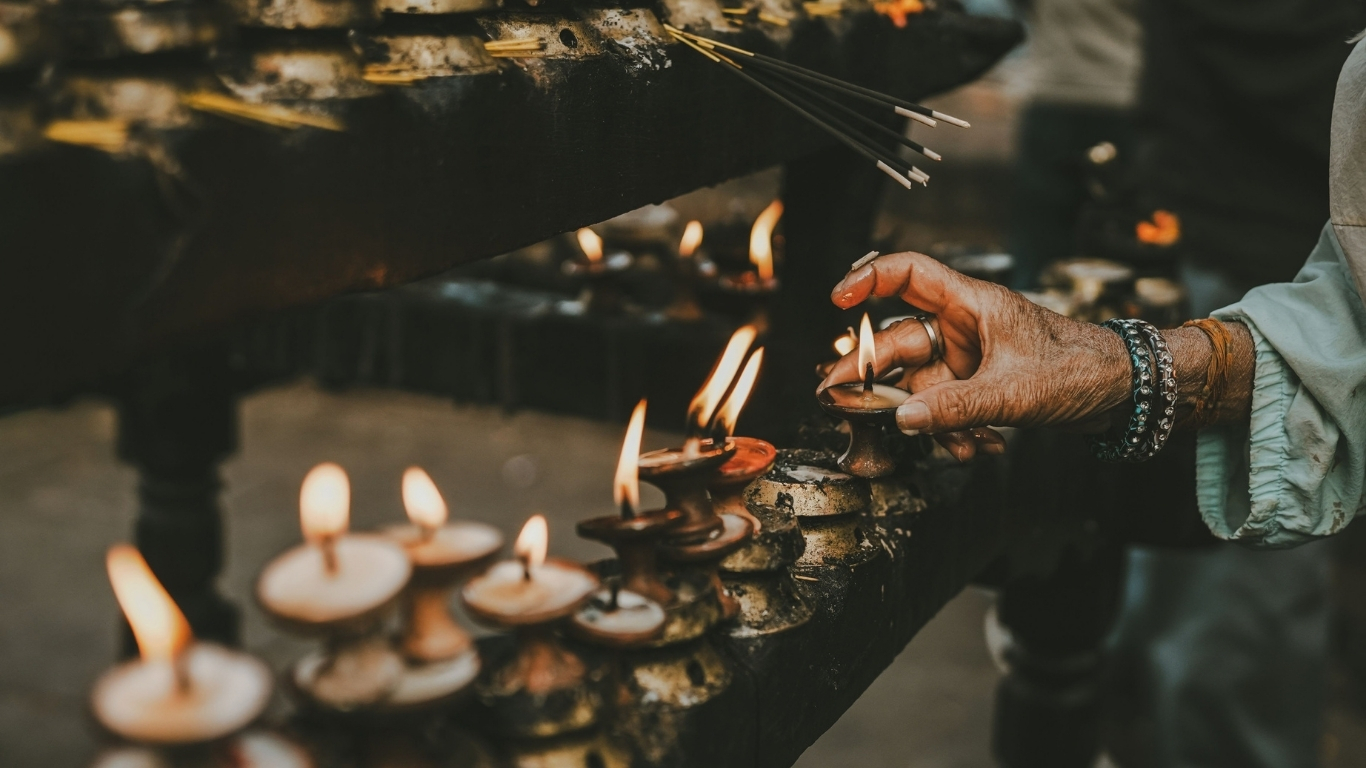
When someone dies, the body is cremated (often within 24 hours). This isn’t morbid efficiency. It’s spiritual practice: releasing the soul from the body so it can continue its journey. The fire is sacred. It’s a ritual of transformation, not just disposal.
Buddhist teachings echo this: impermanence is fundamental to existence. Everything changes. Everything ends. And that’s not tragic,it’s simply how reality works. The practice is to accept this with wisdom, not rage against it.
These aren’t depressing philosophies. They’re liberating ones. They teach Nepali people to accept loss as part of life, to understand death as transition rather than termination, and to process grief through action and community,not through withdrawal.
The Rituals That Actually Help Nepali Communities Heal
When tragedy strikes in Nepal, specific rituals activate immediately. These aren’t optional mourning practices. They’re how communities mobilize their spiritual resources to process collective grief.
The Cremation & Release
For Hindu families (the majority in Nepal), cremation ideally happens within 24 hours of death. Family members gather. Specific rituals are performed. The eldest son (or responsible family member) often lights the funeral pyre.
This isn’t morbid. It’s active spiritual work. You’re doing something. You’re participating in the soul’s release. There’s agency in it,not the passivity of Western funerals where you sit and listen to someone talk about the person.
The ritual gives grief a container. It gives it a shape. It says: this is how we say goodbye. This is how we help the soul transition. We do this together.
In Buddhist communities, similar practices occur, with slightly different emphases but the same principle: active, communal engagement with death.
The 13 Days of Integration
After cremation, there’s a 13-day period of specific practices. The family maintains rituals, prayers, offerings, specific foods, specific behaviors. It’s not lock-yourself-in isolation. It’s structured engagement with grief through spiritual practice.
These 13 days (sometimes 40 in certain traditions) are how the family helps the departed soul and helps themselves process the loss. It’s a known timeline. Everyone knows what to expect. The rituals give shape to the formless experience of loss.
Community as Healing Container
But here’s what’s crucial: these rituals don’t happen in isolation. They happen within community.
Neighbors bring food. Relatives gather. Friends visit during specific times. The community holds the grieving family. Not through silence and distance, but through presence and engagement.
Grief, in the Nepali spiritual framework, is not something you process alone in a dark room. It’s something you move through surrounded by people who know you, who understand the rituals, who share the spiritual framework.
Isolation, giving the family ‘space’, actually undermines this healing process.
Why This Creates Resilience (Not Just Coping)
There’s something remarkable about watching Nepali communities in the aftermath of disaster: they don’t just cope. They continue.
After the 2015 earthquake, within weeks, life resumed. Shops reopened. Guides went back to trekking. Families rebuilt. This wasn’t denial or suppression. It was resilience born from a spiritual understanding that death and loss are part of existence, not aberrations to be overcome.
The spiritual framework teaches: accept what happened. Honor the dead through ritual. Then continue living. Build again. Engage with community. The presence of others isn’t a distraction from grief,it’s the container within which grief can be processed and transformed.
Why Our Western Instinct Feels Wrong Here
Here’s what I’ve come to understand: when Western travelers see Nepali resilience, we sometimes misinterpret it as “they’re fine, they don’t need help.” Or worse, we interpret community continuity as “they’re not really grieving.”
But Nepali people aren’t “fine.” Loss hurts them as much as it hurts anyone. What’s different is *how* they process it. They don’t process it through withdrawal and isolation. They process it through ritual, community, and spiritual understanding.
And here’s the counterintuitive part that challenges our Western assumptions: when communities withdraw after tragedy,when tourists cancel, when outsiders step back,it actually *isolates* the grieving communities at the moment they most need the normal functioning of their economy and society.
Guides need work. Homestays need visitors. Porters need income. Hotels need business. Not out of callousness, but because continuing economic and social life is how communities maintain the fabric that holds them together during crisis.
When we withdraw, thinking we’re being respectful, we’re actually removing the very threads that help communities stay intact.
What the 2015 Earthquake Taught Us
The April 2015 earthquake was devastating. Thousands died. Infrastructure collapsed. Entire villages were destroyed.
Some tourism operators pulled back. Some travelers cancelled. The assumption was: Nepal needs space to recover, not tourism.
But communities that kept working,that maintained tourism infrastructure, that welcomed visitors, that returned to normal life (while grieving and rebuilding),actually recovered faster. Because the economy kept functioning. Because people had income to rebuild. Because social structures remained intact.
Communities that were economically isolated by the withdrawal of tourism took longer to recover.
This isn’t a call to be insensitive. It’s a call to understand what actually helps: staying engaged. Continuing relationship. Maintaining the economic and social connections that bind communities together.
The most respectful response isn’t to pull back. It’s to show up thoughtfully and understand how communities actually heal.
What This Means for You as a Traveler
If you’re considering a trip to Nepal during or after a tragedy, this is what you should know:
Do Come (Thoughtfully)
Coming to Nepal after a disaster isn’t disrespectful. It’s exactly what communities need. Your presence, your economic engagement, your normal human interaction,these things help communities maintain the social fabric that holds them through crisis.
Stay in local homestays. Hire local guides. Eat at local restaurants. Use local porters. The money flows back to communities in real time, helping people rebuild.
Do Engage With the Reality
Your guide might have lost their home in the earthquake. A porter might have family in the disaster zone. A homestay owner might have rebuilt after losing everything. Don’t pretend this isn’t happening. Ask respectfully. Listen. Acknowledge.
But also know that they’re working because continuing life is how they heal. Your presence isn’t intrusive. Your engagement is part of their recovery.
Do Respect the Spiritual Practices
If you encounter cremation rituals, funeral prayers, or family rituals,step back respectfully but don’t disappear entirely. You can be present without intruding. Your quiet presence honors the moment.
If invited into ritual space by your guide or local friends, accept. This isn’t morbid tourism. This is being included in how communities process loss.
Don’t Withdraw
The worst thing Western visitors can do is assume Nepali people want isolation. They don’t. They want continued engagement, continued relationship, continued economic connection. They want life to go on (while they grieve, while they rebuild, while they honor their dead).
Cancelling your trip, thinking you’re being respectful, actually isolates communities at their most vulnerable.
How Nepal Inside Out Shows Up During Crisis
When the Bhote Khoshi flooding happened, we didn’t cancel trips. We assessed safety. We understood which routes were affected. We modified itineraries where necessary. And we kept working.
Why? Because our guides depend on work. Because the communities we travel through depend on tourism income. Because continuing to operate, thoughtfully and safely, is how we support the regions we love.
We also donate when we can. We volunteer if we’re needed. We use our network to help coordinate aid. But the primary way we show solidarity is by continuing to bring visitors, continuing to employ guides, continuing to engage with communities.
This is how Nepal healing works. Not through outside rescue, but through continued relationship and engagement.
The Deeper Teaching: Acceptance and Continuity
At the heart of how Nepali communities process tragedy is a spiritual teaching that Western culture often lacks: the acceptance that life includes loss, that death is part of existence, and that resilience comes from continuing to live fully even in the presence of grief.
It’s not that Nepali people don’t feel loss. They do. Deeply. But they don’t try to pause life while processing it. They grieve and continue. They honor the dead and rebuild. They create rituals that help move through loss, not avoid it.
This is why Nepali communities recover from devastating earthquakes and glacial floods faster than we might expect. Because grief isn’t treated as something that requires isolation. It’s treated as something that requires engagement,with community, with ritual, with life itself.
As travelers, this teaches us something essential: presence matters more than absence. Engagement matters more than distance. Showing up thoughtfully is the most respectful response.
Questions People Ask
Q: Isn’t it disrespectful to trek in Nepal right after a disaster?
A: No. Treading thoughtfully,understanding what happened, respecting your guides’ experiences, supporting local communities,is actually the most respectful response. Withdrawing isolates communities at a vulnerable time.
Q: What if my guide lost someone in a tragedy?
A: They’ll usually tell you directly. Ask how they’re doing. Listen. But also know that working is part of their healing. Your presence and engagement,your normal human interaction,is valuable to them, not burdensome.
Q: Should I donate instead of traveling?
A: Do both. Donate if you can. But also travel when it’s safe. Both matter. Economic engagement through tourism often helps communities more effectively than one-time donations because it’s ongoing and creates employment.
Q: How do Nepali people actually feel about tourists after a disaster?
A: Most want tourists to come. Communities depend on tourism income. Your presence helps them rebuild. Your absence, while well-intentioned, actually harms them economically.
Q: Is it okay to photograph or talk about tragedy I encounter?
A: Ask first. Be respectful. But know that many Nepali people want their stories heard. Telling the world about Nepal’s resilience helps build understanding and support. Don’t treat tragedy as invisible.
Q: What if I encounter grief directly while trekking?
A: Be present. Don’t flee. Your guide might want to talk about it. Listen. Acknowledge. A simple “I’m sorry” or “That must be difficult” can mean a lot. Your compassionate presence honors the person who died and the people grieving.
The Larger Teaching
Watching Nepali communities process tragedy has changed how I understand grief and resilience. The Western approach,isolate, grieve alone, then return to normal,treats grief as a private experience separate from life.
The Nepali approach,engage with ritual, stay within community, continue living while grieving,treats loss as part of the texture of existence.
Neither is “right.” But for Nepali communities rooted in Hindu and Buddhist spirituality, the second approach actually works. It creates resilience. It maintains social fabric. It honors the dead while supporting the living.
As travelers, understanding this changes everything. It means we can show up after disaster. We can engage. We can ask thoughtful questions and listen to stories of loss and rebuilding. We can contribute economically and be part of how communities continue.
And paradoxically, this is the most respectful response,not to pull away, but to stay present and engaged.
What Nepal Inside Out Values
We believe in showing up for communities,not just when things are easy, but when they’re hard.
This means:
– Continuing to work with guides and porters and homestay owners, understanding their resilience and supporting their livelihoods
– Creating trips that respect both the tragedy and the community’s capacity to continue
– Listening to local people about what actually helps (not projecting Western assumptions about grief)
– Acknowledging loss while celebrating life and rebuilding
– Understanding that tourism, done respectfully, is part of how communities heal
We don’t treat Nepal as a museum piece to be preserved unchanged. We treat it as a living, evolving community with its own spiritual wisdom about how to process loss and build forward.
Ready to Engage Thoughtfully?
If you want to travel to Nepal with real understanding,of how communities process loss, how resilience actually works, how your presence can be part of how communities heal,let’s plan something real.
We build trips that engage you with Nepal’s depth: its spiritual practices, its cultural wisdom, its living communities. Not as passive observers, but as respectful participants.
Nepal is resilient. Nepali people are remarkable. And they’re stronger when we show up.
Enthusiastic about Nepal?
Make your dream holiday a reality!
Nepal awaits you with its impressive mountains, vibrant culture and warm-hearted people. Whether you’re looking for a relaxing tour, an active trek or a tailor-made family holiday – we’d be delighted to help you get started.
📩 Get in touch with us and start planning today!
View our trips Request travel proposal